
 By Nick John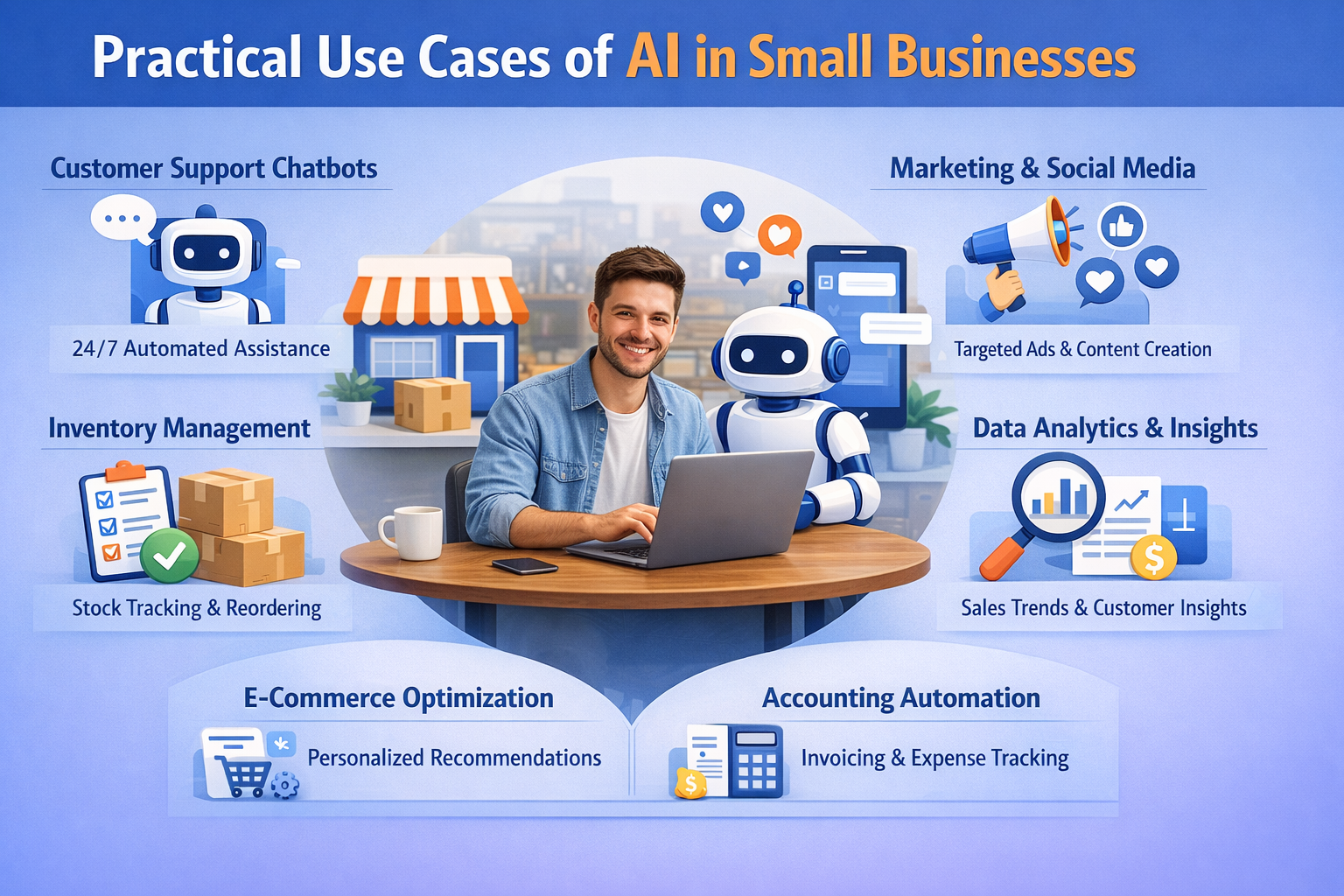
AI is no longer only a future idea for big businesses or tech companies. AI has gotten easier to get, cheaper, and more useful over the last several years, particularly for small enterprises. AI is changing the way small companies work and compete in many ways, from eliminating boring chores to making decisions easier and increasing the customer experience.
Small company owners don’t ask themselves, “Should I use AI?” anymore. Instead, they ask, “Where can AI make the biggest difference with the least amount of money?” This article looks at real-life, useful ways that small firms may employ AI, concentrating on applications that provide demonstrable benefits without needing a lot of technical knowledge.
Understanding AI in the Context of Small Businesses
Artificial intelligence is a kind of technology that can look at data, find patterns, learn from experience, and make judgments with little help from people. AI is usually implemented into software products for small enterprises instead than being created from start.
Most small firms use AI via apps like chatbots, recommendation engines, predictive analytics dashboards, automated marketing platforms, and smart accounting software. These technologies are meant to fix certain operational issues, not to take the place of whole teams.
The main benefit of AI for small firms is that it can make the most of their limited resources. AI is a force multiplier when funds and personnel are tight. It can do jobs that would normally need more people, time, or experience.
AI-Powered Customer Support and Engagement
1. Chatbots for 24/7 Customer Support
AI-powered chatbots are one of the most prevalent and useful ways that small companies employ AI. These virtual assistants can answer client questions all day and night without costing the company more money in wages.
AI chatbots may answer common queries, help people utilize services or goods, help them make reservations, and even handle simple transactions. Modern AI chatbots are different from older rule-based bots since they can comprehend real language and become better over time.
Chatbots help small online merchants, service providers, and SaaS companies respond faster, make customers happier, and let employees concentrate on more complicated problems.
2. AI in Personalized Customer Interactions
With AI, small companies may customize interactions with many customers at once. AI systems may customize answers, offers, and suggestions for each consumer by looking at their prior behavior, purchase history, and browsing tendencies.
Personalization gives small companies an edge over bigger brands by making encounters seem more personal and relevant instead than generic.
Sales and Lead Generation Optimization Using AI
1. Predictive Lead Scoring
AI-powered CRM systems can look at customer data and figure out which leads are most likely to turn into customers. Predictive lead scoring is the name of this procedure. It helps sales teams concentrate their efforts where they will have the greatest impact.
AI doesn’t treat all leads the same. Instead, it looks at things like how engaged they are, their demographics, and their past interactions to find the best prospects.
This makes a big difference in conversion rates and cuts down on wasted effort for small organizations with few salespeople.
2. AI-Driven Sales Forecasting
People have always used their gut feelings or historical trends to predict sales. AI makes things more accurate by looking at patterns, seasonality, and outside factors.
AI-driven projections may help small firms plan their inventory, keep track of their cash flow, and make smart choices about how to expand. This lowers the danger of losing money and makes the business run more smoothly.
AI in Marketing and Content Creation
1. Automated Email Marketing Campaigns
AI-powered email marketing solutions enable small companies communicate the correct message at the right time. These programs look at how people use the service to figure out the best times to send messages, the best subject lines, and the best content types.
AI may also automatically divide audiences into groups, making sure that marketing messages are appropriate to each set of customers. This means more people will read your emails, interact with them, and buy from you.
2. Content Creation and Optimization
More and more people are using AI technologies to help them write blogs, captions for social media, ads, and product descriptions. AI doesn’t replace human creativity, but it does speed up the process of creating content.
AI can help small companies come up with content ideas, make their SEO better, and keep things consistent across all of their channels. This is really helpful for firms who can’t afford to hire a full-time content crew.
3. Social Media Management with AI
AI-powered social media platforms can plan posts, look at how people are interacting with them, propose ways to make them better, and even answer simple comments. These technologies let small companies be active on social media without having to spend hours every day on the sites.
Financial Management and Accounting Automation
1. AI-Based Expense Tracking
Small company entrepreneurs typically have trouble keeping track of their money. AI-powered accounting software can automatically sort costs, match transactions, and highlight problems.
This cuts down on mistakes and makes sure that financial records are correct without needing to know a lot about accounting.
2. Cash Flow Prediction and Budgeting
AI technologies can look at how much money you make and how you spend it to guess how much money you’ll have in the future. This lets small firms prepare for shortages, make investments, and prevent financial shocks.
For organizations with small profit margins, AI-driven financial insights may make the difference between being stable and being unsure.
Inventory and Supply Chain Management
1. Demand Forecasting
AI helps small companies better estimate demand by looking at past sales data, seasonal patterns, and signals from the market.
Better forecasting means fewer times when you run out of goods, less times when you have too much stock, and happier customers. This is especially useful for firms that sell things, make things, or do business online.
2. Supplier Optimization
AI may look into how well a provider does based on price, delivery time, and dependability. This information may help small companies get better deals, find other suppliers, and avoid problems.
Human Resources and Workforce Management
1. AI in Recruitment and Hiring
Finding the proper people to hire is important but takes a lot of time. AI-powered hiring tools may go through resumes, compare individuals to job descriptions, and even use language analysis to figure out how well they can communicate.
This makes it easier for small firms to recruit people quickly and fairly, which cuts down on prejudice in the hiring process.
2. Employee Performance and Retention
AI systems may look at data on how well employees are doing, how engaged they are, and what they say to find problems before they happen. Companies may utilize these data to keep employees longer, create better training programs, and get more done.
AI in Operations and Process Automation
1. Automating Repetitive Tasks
Small companies waste a lot of time on administrative duties that need to be done again and over, such entering data, making schedules, and writing reports. Automation technologies driven by AI do these jobs quickly and reliably.
This lets company owners and workers concentrate on more important things like planning, building connections with customers, and coming up with new ideas.
2. Intelligent Workflow Management
AI can look at processes and find places where things are slowing down or not working well. AI helps small companies run more smoothly and save money by suggesting ways to optimize their processes.
Data Analytics and Decision-Making with AI
1. Turning Data into Actionable Insights
Small companies collect data every day, from sales to website analytics, but they frequently don’t know how to make sense of it. AI-powered analytics tools turn raw data into clear insights by using visual dashboards and automated reports.
These insights help company leaders make smart choices without just going with their gut.
2. Competitive Analysis
AI technologies may keep an eye on how much your rivals charge, how they promote themselves, and what customers think. Small companies may utilize this knowledge to change what they provide and stay competitive in marketplaces that are always changing.
AI Use Cases Across Different Small Business Industries
1. Retail and E-Commerce
AI makes suggestions for products, pricing strategies, managing inventories, and helping customers better. Customers are more likely to buy anything when they have a personalized buying experience.
2. Healthcare and Wellness Services
AI is used by small clinics and wellness professionals to make appointments, talk to patients, and help with basic diagnosis. AI makes things easier for administrators and better for patients.
3. Hospitality and Travel
Hotels, guesthouses, and travel companies utilize AI to change prices, make bookings easier, and connect with customers. AI chatbots make booking easier and free up staff time.
4. Professional Services
Consultants, agencies, and freelancers utilize AI to write proposals, keep track of time, send invoices, and talk to clients. AI makes things run more smoothly without lowering the quality of service.
Common Challenges of Implementing AI in Small Businesses
Even while AI has many advantages, it may sometimes be hard to use. Some typical impediments include worries about cost, not knowing enough about technology, data privacy problems, and not wanting to change.
But a lot of AI products are made just for those who aren’t tech-savvy. AI is easier to employ than ever because to cloud-based solutions, subscription pricing, and interfaces that are easy to use.
The most important thing is to start small, choose tools that fit with your company objectives, and grow slowly.
How to Start Using AI in a Small Business
The first stage is to find activities that are repetitive or take a long time that can be automated. After that, companies should look at AI tools based on how easy they are to use, how well they work with other products, and how much money they make.
It’s just as crucial to train staff as it is to establish reasonable goals for them. AI works best when it works alongside human judgment instead of taking its place.
Why Buzz Planets Is the Right Platform to Explore AI for Business Growth
Buzz Planets is a great place to follow if you want to remain ahead in the fast-changing world of technology and business. Buzz Planets always offers in-depth, useful, and easy-to-understand articles on new technologies, AI uses, digital trends, and ways to develop your company.
Buzz Planets helps small company owners, entrepreneurs, and tech fans understand how to use complicated technology in the real world. Readers may learn how to use AI efficiently without making things too complicated by reading Buzz Planets.
Conclusion
Artificial intelligence is no longer only for big companies. AI gives small companies useful tools that help them work more efficiently, save money, make customers happier, and make better decisions.
AI solutions help small companies compete in a market that is becoming more digital by giving them the capacity to handle everything from customer service and marketing to finance and operations. The key to success is to use AI wisely, beginning with setting clear objectives, picking the correct tools, and making them part of your daily work.
Small firms who adopt AI technology early will be better able to grow, adapt, and survive as it continues to change.
Frequently Asked Questions (FAQs)
1. Is AI expensive for small businesses?
AI is cheaper than ever before. A lot of products provide monthly memberships, free trials, and pricing that may grow with your company.
2. Do small businesses need technical expertise to use AI?
Most AI tools are designed for people who aren’t tech-savvy. You don’t need to know how to code or do data science to use popular apps like chatbots, marketing automation, or analytics.
3. Can AI replace employees in small businesses?
AI should be utilized to help workers, not take their jobs. It does jobs that need to be done again and over, so employees may concentrate on creative and strategic work.
4. Is AI safe for handling customer data?
Reputable AI platforms have to follow tight rules for security and compliance. Small enterprises should choose reliable service providers and follow the rules for protecting data.
5. How long does it take to see results from AI?
A lot of organizations see changes in only a few weeks, particularly in areas like marketing, customer service, and automation. AI systems learn from data over time, which makes their long-term benefits grow.
Summary
AI is changing small companies by automating processes, making it easier for customers to interact with them, boosting marketing, and making decisions easier. AI can help organizations develop, even those that aren’t tech-savvy, thanks to cheap and easy-to-use technologies. Small companies may stay competitive and ready for the future by using AI wisely and keeping up with news on sites like Buzz Planets.