
 By Nick John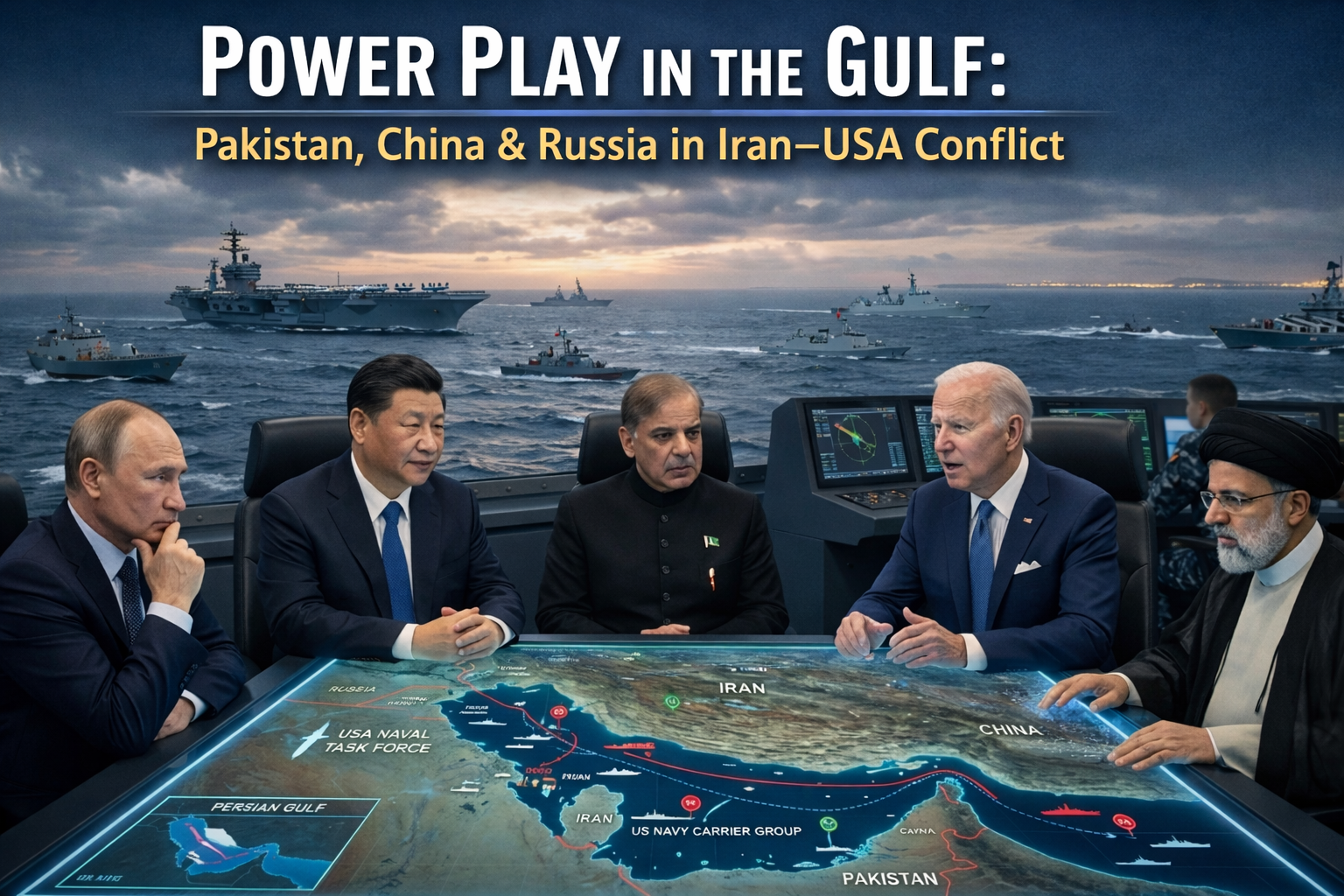
The potential for military conflict between Iran and the United States has historically represented a significant geopolitical scenario in contemporary international relations. Even though this kind of war hasn’t turned into a full-blown direct conflict, tensions—ranging from sanctions to proxy wars—have kept the world on edge.
If Iran and the US were to go to war, regional and global powers would have a big impact on how things turned out. Pakistan, China, and Russia are three of the most important players. Each of these countries has its own strategic goals, allies, and limits that would affect how they would act in a conflict like this.
This article goes into great detail about how these three countries might react, what the geopolitical factors are, and what this means for global stability as a whole.
Getting to the Bottom of the Iran–USA Conflict
The animosity between Iran and the United States has historical origins, notably stemming from the Iranian Revolution. Since then, tensions have remained high because of disagreements over nuclear goals, regional power, and ideological differences.
Tensions have risen in the last few years since the U.S. pulled out of the Joint Comprehensive Plan of Action and put strict sanctions in place. Military actions in the Persian Gulf and proxy wars in Iraq and Syria have made the rivalry even worse.
A direct war wouldn’t just affect two countries; it would also affect alliances, energy markets, and global security systems.
Pakistan’s Role: Finding a Balance Between Friends
Strategic Position and Limitations
Pakistan is in a sensitive geopolitical spot. It shares a border with Iran and has strong ties with the US, especially when it comes to defense and trade. Pakistan also has strong ties with Gulf countries like Saudi Arabia, which often disagree with Iran’s policies in the region.
If there were a war, Pakistan would have to walk a fine line. It can’t afford to make Iran angry because of how close they are to each other and how important border security is. On the other hand, its long-standing ties to the US and Gulf allies would affect how it acts diplomatically.
What the Policy is Likely To Be
Pakistan would probably take a neutral or mediating position. Islamabad has always stressed the importance of stability in the region and has often offered to help settle disputes between Muslim countries.
It is very unlikely that the military will get involved directly. Pakistan could instead:
- Make the border safer so that conflicts don’t spread
- Use diplomacy to lower tensions
- Don’t take a clear side for or against Iran or the US
- Things to think about inside and outside the economy
If there was a war next door, it would have a big effect on Pakistan’s economy and internal stability. A lot of refugees coming in, trade routes being blocked, and a lack of energy could all be big problems.
So, Pakistan’s main job would be to fix things and be a diplomat in the region, not to take part in things.
China’s Role: Economic Interests and Strategic Opportunism
Economic and energy security stakes
Iran does a lot of business with China, which is also a big buyer of Iranian oil. Iran is an important link between Asia and Europe through projects like the Belt and Road Initiative.
A war with Iran would put China’s energy security at risk and make important trade routes less safe. So, Beijing has a strong reason to stop things from getting worse.
Positioning in Terms of Diplomacy and Strategy
China would probably be against any U.S.-led military action against Iran at places like the United Nations.
But China is careful about going to war with the United States directly. Instead, it would have the following duties:
- Giving Iran diplomatic help
- Pushing for talks and a ceasefire
- Maybe offering economic help to make up for the sanctions
- Military Involvement: Not Likely, but Not Impossible
China has been building up its military, but it usually stays out of conflicts that are far away. Any military help to Iran would probably be indirect, like sharing intelligence or helping with logistics, not sending troops.
Long-Term Strategic Benefits
If the U.S. gets involved in a long war, China could gain strategically by increasing its power in Asia and beyond. This fits in with its bigger goal of changing the way power is distributed around the world.
Russia’s Job is To Stop The US From Having Too Much Power
Links to Iran in the Past
Both Russia and Iran want to stop the U.S. from having too much power in the Middle East. In wars like the Syrian Civil War, they worked together closely to help the Syrian government.
If there is a war between the US and Iran, this partnership could lead to cooperation.
Military and Strategic Planning
Russia has a lot of military power and has shown that it is willing to use it outside of its own borders. But, like China, it would think about the risks of going up against the United States directly.
Russia might do the following:
- Giving Iran weapons and defense systems
- Giving intelligence and strategic advice
- Using diplomatic channels to question what the U.S. is doing
- Goals for geopolitics
Russia sees a conflict between Iran and the US as a chance to weaken US power. Russia can make itself a major player in world politics by supporting Iran, either directly or indirectly.
But Moscow would also want to avoid a full-scale war that could make the region less stable and hurt its own economic interests.
Effects on the Region and The World
Effect on the Middle East
A war would probably make the whole Middle East less stable. Saudi Arabia, Israel, and Turkey would get involved in the conflict in some way or another.
Proxy wars could get worse in Yemen, Iraq, and Syria, which would make things even more unstable for a long time.
Effects on the Economy
The Persian Gulf is a very important place for the world’s oil supply. Any interruption would cause energy prices to rise, which would hurt economies all over the world.
Countries like China and Pakistan, which get a lot of their energy from other countries, would have a hard time economically.
Changes in the Balance of Power Around the World
A war between Iran and the US could speed up the shift from a unipolar to a multipolar world. China and Russia might take advantage of the situation to gain more power, while the U.S. might not have enough resources.
The Part That International Organizations Play
The United Nations and other groups like it would be very important in trying to end the conflict. But if the major powers don’t get along, they might not be able to do their jobs as well.
Sanctions, peacekeeping missions, and diplomatic negotiations would be important tools, but they would only work if the people involved were willing to work together.
Why This Matters: A Wider View
To understand how complicated modern geopolitics is, you need to know what Pakistan, China, and Russia would do in a war. These countries don’t just watch; they also help shape the world order.
Buzz Planets (buzzplanets.com) and other sites like it give readers more in-depth information about world events, geopolitical strategies, and global conflicts. In a world where regional conflicts can quickly turn into global crises, it’s very important to stay up to date.
Conclusion
The possibility of a war between Iran and the US is one of the most important geopolitical flashpoints of our time. Iran and the United States would be the main players, but Pakistan, China, and Russia would also play important roles in deciding the outcome.
Pakistan would probably be a careful mediator, putting stability in the region first. China would focus on protecting its economic interests and not getting into direct fights. Russia, on the other hand, would try to weaken U.S. power and show off its own strategic position.
These countries show that modern conflicts are rarely one-off events; they are part of a larger web of global interests.
FAQs
1. Would Pakistan back Iran in a war with the United States?
Because Pakistan has strategic ties to both countries, it is more likely to stay neutral and focus on mediation than to support either side directly.
2. What makes China want to be friends with Iran?
Iranian oil is important to China, and Iran is an important partner in China’s Belt and Road Initiative. This means that Iran’s stability is very important to China’s economic plans.
3. In this kind of war, could Russia fight the US directly?
Direct conflict is not likely, but Russia could help Iran in other ways, such as by giving them weapons, information, and diplomatic support.
4. What would happen to oil prices around the world if there were a war?
If the Persian Gulf’s oil supply were to be disrupted, oil prices would probably skyrocket, which would hurt economies all over the world.
5. What would the UN do?
The United Nations would try to mediate and stop things from getting worse, but it would only work if the major powers worked together.
Summary
A war between Iran and the US could have big effects on the whole world. Pakistan would probably stay neutral and push for diplomacy, China would protect its economic interests without getting into a fight, and Russia would try to counter U.S. influence by giving Iran strategic support. These roles together show how complicated modern geopolitics is and how conflicts around the world are all connected.