
 By Nick John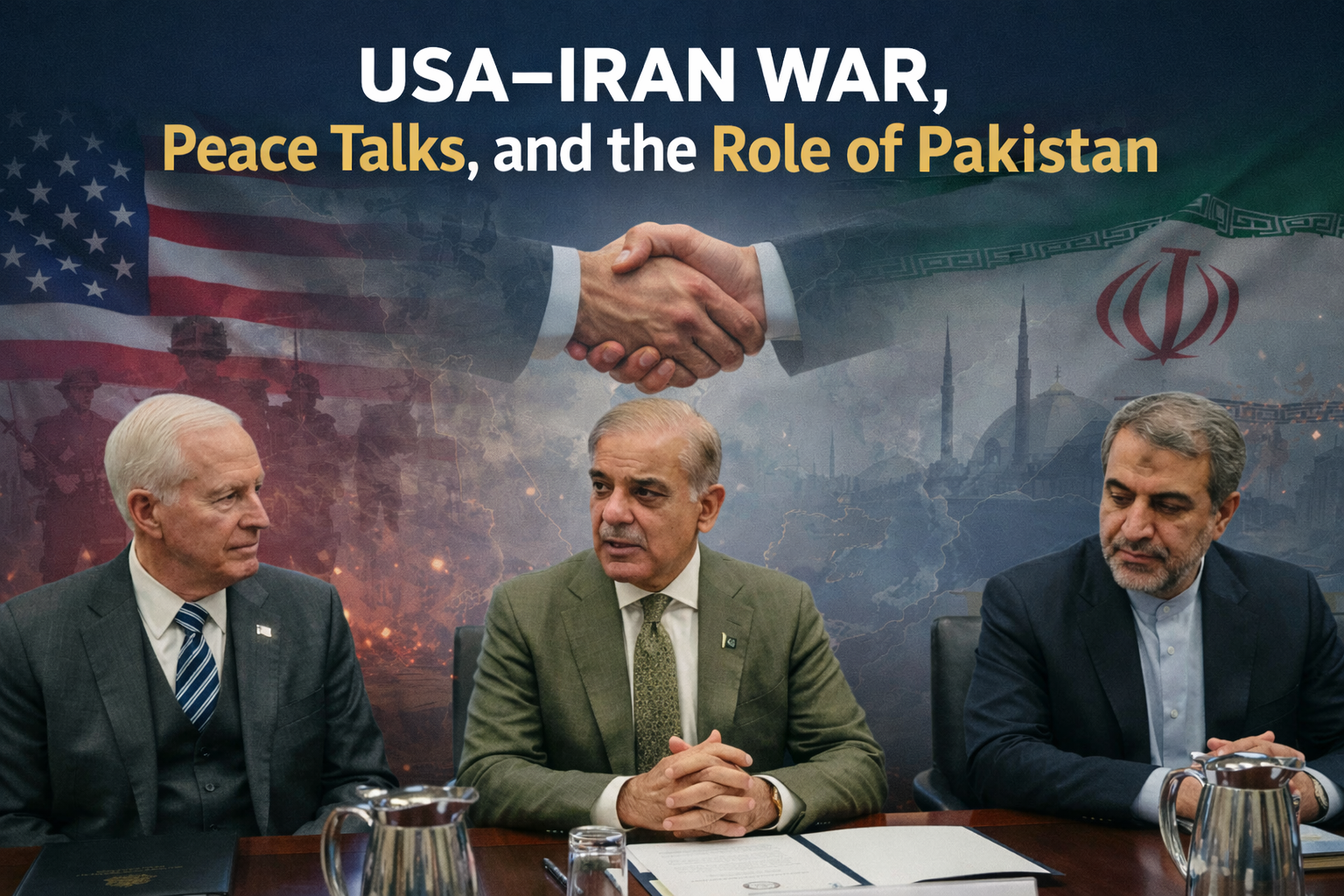
The relationship between the United States and Iran has been one of the most complicated and tense ones in world politics for a long time. Over the years, their interactions have included everything from indirect confrontations and economic sanctions to times of careful diplomacy. This long-standing rivalry reached a dangerous turning point in 2026, when tensions rose to the point where the world was on the brink of war.
Even though tensions were rising, diplomatic efforts quickly began to stop a full-blown war. Pakistan became an unexpected player in the peace talks. Pakistan played a key role in global diplomacy by hosting and facilitating talks between the two enemies.
This article goes into great detail about the historical background, the recent rise in tensions, the ongoing peace talks, and Pakistan’s changing role as a mediator in one of the most important geopolitical crises of our time.
Historical Roots of US–Iran Tensions
The Iranian Revolution was the start of the bad relationship between the US and Iran. Before this happened, the Shah was in charge of Iran, and the US strongly supported him. The revolution, on the other hand, led to the creation of an Islamic Republic that turned down Western influence, which changed the relationship in a big way.
The Iran Hostage Crisis made the divide even worse not long after the revolution. American diplomats were held hostage in Tehran for more than a year, which hurt diplomatic relations for a long time. After that, both countries saw each other as untrustworthy and as competitors in terms of strategy.
Over the years, tensions have grown because of disagreements about Iran’s nuclear goals, US economic sanctions, and different roles in regional conflicts. These problems made it possible for even small changes to lead to big problems.
The 2026 Escalation: From Pressure to Confrontation
In early 2026, the relationship between the US and Iran quickly got worse. A series of political and military moves made things worse, bringing both countries to the brink of open war.
The Strait of Hormuz, which is an important route for oil shipments around the world, was a major flashpoint. Disruptions in this area had immediate effects on the economy because energy markets reacted strongly to uncertainty. When both sides took aggressive actions, like moving troops around and putting economic restrictions in place, things got worse.
Even though the fight didn’t turn into a full-blown war, there was still a very real chance that it would. This made people around the world call for calm and talks right away. The danger of instability in the region, along with the effects on the global economy, made it clear that a diplomatic solution was needed.
Emergence of Peace Talks
1. A Rare Opportunity for Dialogue
As tensions rose, both countries were willing to talk to each other directly. This was a big change because the US and Iran hadn’t talked directly in decades.
Both sides knew that a long-lasting war would be bad for both sides, so they agreed to start peace talks. Military conflict posed huge risks, not just for the two countries but also for the whole Middle East and the world economy.
2. Key Issues in Negotiations
The talks between the two countries have been about a number of long-standing problems. Iran’s nuclear programme, which has been a source of conflict for a long time, is at the centre. The US has always wanted strict limits, but Iran says it has the right to develop nuclear technology for peaceful purposes.
Another big worry is the military’s presence and power in the Middle East. Both countries have strategic interests in the area and often back different sides in different conflicts. This has made it harder to find common ground.
Another important topic has been who controls and protects international waterways, especially the Strait of Hormuz. This issue is a top priority in negotiations because making sure that global trade can go through safely is important for economic stability.
Pakistan’s Role as a Mediator
1. Strategic Positioning
Pakistan is involved in the peace process because of its unique geopolitical position. Pakistan has been able to stay neutral and trustworthy as a middleman between the US and Iran by keeping diplomatic ties with both countries.
Pakistan is not directly involved in regional rivalries like many other Middle Eastern countries are. Because it is neutral, both sides trust it, which makes it a good way to start a conversation.
2. Hosting Diplomatic Engagements
Islamabad, the capital city, became a centre for diplomatic activity. Pakistan offered a neutral place for both sides to talk without outside pressure by hosting high-level meetings.
This role greatly improved Pakistan’s reputation around the world. It showed that the country could help with global peace efforts in a positive way and showed how important it is in international diplomacy.
3. Behind-the-Scenes Efforts
Pakistan has been very important in keeping lines of communication open between the two sides, even outside of formal meetings. Backchannels in diplomacy have made it possible to send messages, proposals, and answers even when things are tense.
These kinds of things are very important in negotiations where a lot is at stake and direct communication isn’t always possible. Pakistan has helped keep the conversation going and stop misunderstandings by making these exchanges possible.
4. Challenges in Achieving Peace
Even though people are still working on it, finding a permanent solution is still a difficult task. The United States and Iran still don’t trust each other, which makes things harder. Years of hostility have made it hard to break through a mental barrier.
The nuclear issue is still the biggest problem. Both sides are very set in their ways, which makes it hard to reach a compromise. Stopping the spread of nuclear weapons is very important to the United States, but Iran sees its nuclear programme as a matter of national security.
Regional factors are also very important. Other Middle Eastern countries have a stake in how these talks turn out, which can affect the direction and success of peace efforts.
Ongoing military pressure, on the other hand, makes things even more complicated. While talks are still going on, strategic actions on the ground can slow progress and make things worse.
Global Implications of the Conflict
The US–Iran conflict has effects that go far beyond the two countries involved. Changes in the Middle East have a big effect on global markets, especially when energy supply routes are in danger.
Changes in the Strait of Hormuz can cause big changes in oil prices, which can have an effect on economies all over the world. Countries that depend a lot on energy imports are especially at risk for these kinds of changes.
The situation also shows how global diplomacy has changed. Pakistan and other new players are taking on bigger roles in resolving conflicts, which is a sign of a shift towards a more multipolar world order.
Pakistan’s Strategic Gains
Pakistan’s role in the peace process has been good for a number of reasons. By acting as a go-between, it has improved its reputation as a responsible and capable player on the world stage.
This job has also made it possible to build stronger diplomatic and economic ties with other countries. More recognition from other countries can lead to new partnerships and collaborations that will help Pakistan in the long run.
Also, the experience Pakistan gains from these high-level talks makes its diplomatic institutions stronger and better able to handle future problems.
Future Outlook
We don’t know what will happen between the US and Iran in the future, but there are some reasons to be cautiously hopeful. The fact that both sides are willing to talk to each other shows that a peaceful solution is still possible.
But progress will probably be slow. Negotiations can go on for a long time, with times of stress and times of progress happening at different times. For these talks to work, both sides will need to be able to agree on important issues.
Pakistan’s ongoing involvement could have a big impact on the outcome. It will be very important for the peace process to stay on track if it can stay neutral and help people talk to each other.
The Role of Media and Public Awareness
In today’s world, where everything is connected, it’s important to have access to clear and accurate information. It’s often hard for the average person to understand complicated geopolitical events, which makes it even more important to have reliable sources of analysis.
Buzz Planets (buzzplanets.com) and other similar sites are great places for people who want clear and helpful information about what’s going on in the world. These kinds of platforms help people stay informed and interested in world events by giving them clear and detailed explanations.
Conclusion
The disagreements between the US and Iran are one of the biggest geopolitical problems of our time. There is still a chance of conflict, but peace talks that are still going on are a way to bring about stability.
Pakistan’s role as a mediator has been both important and strategic. It has helped a lot with efforts to de-escalate by making it easier for people to talk to each other and providing a neutral place for negotiations.
There are still many problems to solve, but diplomatic engagement gives us hope. The next few months will be very important in deciding if these efforts can bring about a lasting peace.
FAQs
1. What is the main reason why the US and Iran are at odds with each other?
The Iranian Revolution, disagreements over Iran’s nuclear programme, and bigger geopolitical rivalries in the Middle East are all historical events that led to the conflict.
2. What caused tensions to rise in 2026?
Strategic confrontations, such as disruptions in important trade routes like the Strait of Hormuz and ongoing disagreements over military and nuclear issues, made tensions worse.
3. What part does Pakistan play in the talks for peace?
Pakistan is acting as a go-between by hosting talks, making it easier for the two countries to talk to each other, and keeping diplomatic channels open.
4. Have the peace talks worked so far?
There hasn’t been a final agreement yet, but the talks have been successful in keeping the lines of communication open and stopping the situation from quickly turning into full-scale war.
5. What might happen in the future?
The future may include more talks, a possible agreement, or more tension, depending on how both sides deal with important issues.
Summary
In 2026, the US and Iran almost went to war, but peace talks have opened the door to a peaceful solution. Pakistan has become an important mediator, helping both sides talk to each other. There are still problems, but ongoing talks give us hope for a peaceful solution.