
 By Nick John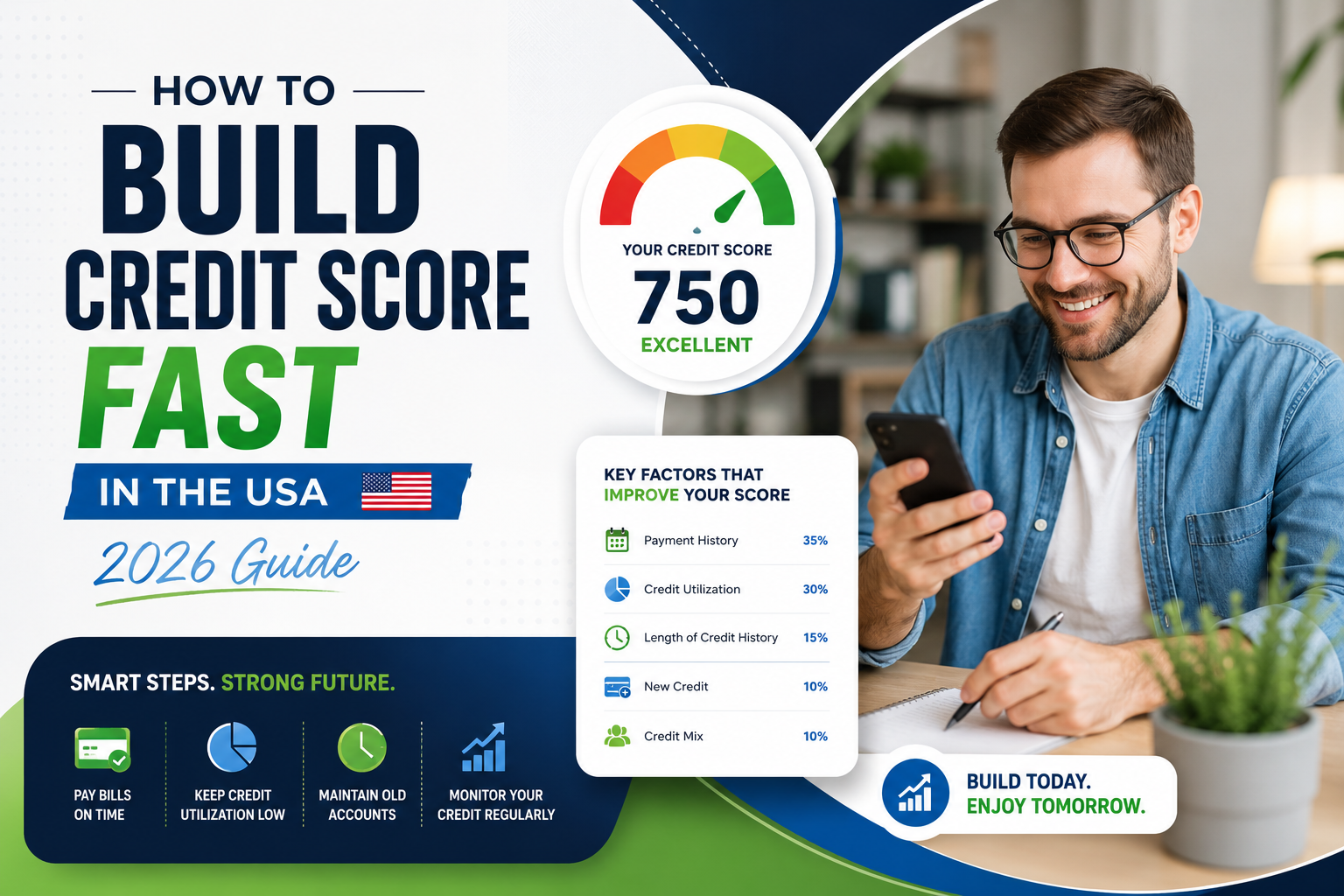
In 2026, building a strong credit score in the United States has become more important than ever. Your credit score has a big impact on your financial life, whether you’re buying a house, financing a car, qualifying for the best credit cards, renting an apartment or even getting better insurance rates. Many people believe it takes years to improve your credit score. The reality is that with the right strategy, you can boost your credit score a lot faster than most people think.
A good credit score is not only for borrowing money. It shows your financial responsibility and tells lenders how trustworthy you are with debt. With lenders using more sophisticated credit evaluation systems in 2026, it’s more important than ever to understand how credit works and how to improve your score effectively.
This detailed guide will tell you everything you need to know to build your credit score fast in the USA. The strategies described here are realistic, easy to implement, and perfect for students, immigrants, young professionals, and anyone else looking to recover from bad credit history.
What Does a Credit Score Mean?
A credit score is a number between 300 and 850 that shows your creditworthiness. In the United States, credit scores generally range from 300 to 850. The higher the score, the higher the chances of getting loans and lower interest rates.
Most lenders use scoring models developed by companies such as Fair Isaac Corporation (FICO) and VantageScore. These scoring systems look at your borrowing behaviour, based on information that is collected from your credit reports.
Your credit report is your credit history including credit cards, loans, payments history, balances, inquiries. Credit bureaus such as Experian, Equifax and TransUnion compile this information and create reports that lenders use.
In 2026, the average credit score in the USA continues to rise, so lenders are becoming more selective. This makes it even more important to learn good credit habits early.
Why Building Credit Quickly Matters in 2026
Financial conditions in the U.S. are ever changing. Interest rates, lending standards and inflation can directly impact borrowing costs. A better credit score can save you thousands of dollars in the long run.
People with good credit scores often get lower mortgage rates, better car loan terms and higher credit card limits. They also may be exempt from security deposits for utilities and rental agreements.
In today’s competitive financial climate, employers and landlords may consider an individual’s credit history as part of their decision-making process. Therefore, building your score fast can help improve not only your financial opportunities but also your overall lifestyle.
How Credit Scores Are Determined
The first step in improving your score quickly is knowing why you received your score.
1. Payment History
Your score is most affected by how you pay your bills. It’s typically around 35% of your FICO score. Missed payments, collections and defaults, even late payments can ruin your credit.
The best way to build trust with lenders is to make your payments on time, every time.
2. Use of Credit
Credit utilization is the amount of your available credit that you are using. If your credit limit is $1,000 and your balance is $800, you have 80% utilization.
Experts say you should try to keep your utilization below 30%, with under 10% being ideal for quick credit improvement.
3. Credit History Length
A longer credit history helps your score. The older the accounts, the more stable and responsible the borrower is.
4. Mix of Credit
Different types of accounts can help your score. Examples include credit cards, auto loans, student loans and personal loans.
5. New Credit Inquires
Applying for lots of credit accounts in a short period of time can temporarily lower your score as lenders may see this as risky behaviour.
First, Check Your Credit Report
You need to know where you stand before you try to better your score. Get your credit reports from the three major credit bureaus.
Credit Report Errors Are More Common Than You Think Inaccurate late payments, stale balances or fraudulent accounts can unfairly ding your score.
Disputing errors can sometimes improve your credit score surprisingly quickly. Corrections are typically processed in 30 to 45 days.
Pay All Your Bills On Time
The most important rule in building credit is paying bills on time.
Even one missed payment can stay on your report for years. With lenders using more advanced risk assessment systems in 2026, the consistency of payments is more important than ever.
Where possible, set up automatic payments. If automatic payments are not a good option, set calendar reminders or banking alerts to make sure bills are never missed.
Consistent payments of small, recurring bills like streaming subscriptions or phone bills can also add positively to credit accounts.
Pay Off Credit Card Balances Quickly
Carrying high balances is one of the quickest ways to hurt your credit score. Lowering your balances can often help your score in just one or two billing cycles.
Focus on aggressively paying down revolving debt. Start with the cards that have the highest utilization percentage. Even partial reductions can aid your score.
For example, a decrease in utilization from 90% to 30% can have a big impact on your score in a short period of time.
Even if you plan to pay off cards later, don’t max them out. Credit card companies report balances on a regular basis and if your reported balances are high it can negatively impact your score even if you pay off the balance in full after they report.
Become a Verified User
One of the fastest ways to legitimately build credit is to become an authorized user on someone else’s credit card account.
If you have a family member or someone you trust who has a long credit history, low balances and perfect payments, their positive account history may appear on your credit report.
This strategy can help those with little or no credit history quickly build a stronger profile.
But make sure the primary account holder has responsible financial habits. Bad account management can be bad for you, too.
Obtain a Secured Credit Card
Secured credit cards are quite effective for beginners or people who are trying to rebuild credit.
A secured card is based on a refundable security deposit, which is typically your credit limit. These cards, like traditional credit cards, send your payment activity to credit bureaus.
Use the card for small purchases and pay off the balance in full each month. Used responsibly, it can help you quickly build positive payment history.
Many secured card issuers in 2026 also offer automatic upgrades to unsecured cards after a few months of responsible use.
Make Use of Credit Builder Loans
Credit builder loans are on the rise across the USA.
Unlike traditional loans, the borrowed money is kept in a savings account while you make your monthly payments. When the loan is fully repaid, the funds are transferred to you.
This structure builds payment history and encourages savings at the same time.
These products are often offered by credit unions and online financial institutions to people with limited or damaged credit.
Don’t Apply for Too Many Credit Cards
A lot of people mistakenly think that if they open several credit cards in a short period of time, it will boost their score faster. In fact, too many applications can lower your score for a short period of time.
Each hard inquiry does ding your score a little and stays on your report for up to two years.
Instead of applying for several cards at one time, focus on managing one or two accounts well.
Strong credit is built on quality, not quantity.
Keep Old Accounts Active
Sometimes closing old credit cards can hurt your score because it lowers your available credit and decreases your average account age.
Even if you don’t use an older card much anymore, it can still help your credit profile to keep it open.
If the card has no annual fee, consider making small occasional purchases to keep the account active.
Establish Credit with Rent and Utility Payments
More people are reporting credit information using alternate methods in 2026.
Many services today allow things like rent payments, utility bills, streaming subscriptions and phone payments to show up on your credit report.
This is especially useful for young adults or immigrants who may not have a traditional borrowing history.
Over time, having these positive payment histories can boost your credit profile.
Don’t Co-sign on Risky Loans
When you cosign for someone else, it means that you are legally responsible for the debt if they don’t pay.
Many people damage their credit because a friend or relative was late on payments on a loan they co-signed.
A borrower who becomes financially irresponsible can hurt your score a lot.
Don’t co-sign unless you have full confidence in the borrower and understand the financial risks.
If You Have Debt Problems, Negotiate with Creditors
If you are strapped for cash, one of the worst things you can do is ignore debt.
Many lenders will work with you on hardship programs, reduced payments or temporary plans for relief.
Early communication can prevent accounts from going into collections – which tank your score.
Debt settlement can be useful in some cases, but it can also have an impact on your credit history, so it should be approached with caution.
Strategic Ways to Remove Collection Accounts
Collections can really hurt your credit score.
Sometimes you can negotiate a “pay for delete” agreement, in which the collection agency agrees to delete the account after you pay.
Not all agencies will agree to this practice, but it is worth discussing.
Paid collections look better than unpaid collections, especially with new credit scoring models released in recent years.
Keep a Close Check on Your Credit Regularly
Monitoring your credit allows you to see progress and catch fraud early.
Many banks and financial apps now offer free credit score tracking. Monitoring allows you to see the impact of your actions on your score over time.
Monitoring your progress can also help you stay motivated and financially disciplined.
Build Credit as an International Student or New Immigrant
New immigrants and international students often struggle because they lack US credit history.
More financial institutions in 2026 will offer newcomer-friendly products. Some companies also consider international credit history when making an approval decision.
A secured card, student card or credit builder loan can help build a strong foundation quickly.
In the first year, responsible management is especially important because early habits determine the path for long-term credit growth.
How Quickly Can You Build Credit
It depends where you begin.
Someone with no credit history might see meaningful progress in three to six months. Depending on how bad the negative items are, it can take anywhere from six months to two years to repair damaged credit.
Credit improvement isn’t instant, but steady habits produce measurable results in less time than most people realize.
The quickest improvements are from paying down balances and fixing report errors.
Credit Score Killers
A lot of people make avoidable mistakes that hurt their scores.
The most common problems include missing due dates, maxing out cards, applying for too much credit, ignoring collections and closing old accounts.
Another misconception is that using a debit card will help you build your credit. Debit cards don’t report payment history to the credit bureaus.
Financial education is important because small mistakes can have long-term consequences.
Top Habits for Maintaining Great Credit
Once your score is built, it’s easier to maintain it through disciplined financial behaviour.
Continue to make your payments on time and keep your utilization low. Read your statements carefully, and avoid needless debt.
Building emergency savings also protects your credit because you’re less likely to miss payments due to unexpected expenses.
At the end of the day, the magic formula for long-term credit success is consistency.
The Future of Credit scores in America
Credit scoring systems are changing fast.
Artificial intelligence and alternative data are increasingly impacting lending decisions. Payment history for rent, subscriptions, utilities and digital financial behaviour may be more important in future scoring models.
As these systems evolve, responsible and consistent money management across a number of financial areas is likely to stand to gain most consumers.
Those in the know of these trends may be better poised to stay financially ahead in the years ahead.
The Significance of Financial Education
Many Americans have credit problems simply because they were never taught how the system works.
People who understand interest rates, debt management, budgeting, and credit use can make better choices with their money.
Understanding credit early on can help you avoid years of financial hardship and improve your long-term wealth building opportunities.
With reliable educational platforms, you can assist people in staying current with the latest trends in personal finance, credit strategies, and smart money management techniques.
Get the Latest Financial Tips on Buzz Planets
For more practical guides on personal finance, budgeting, improving your credit, making money online and planning your finances smartly visit Buzz Planets. The platform routinely shares easy-to-understand financial content to help readers make smarter money decisions in today’s changing economy.
Conclusion
It is entirely possible to build a credit score fast in the USA in 2026 if you understand how the system works and you maintain disciplined financial habits. Some of the most important factors are paying your bills on time, maintaining a low credit utilization, reviewing your credit report, and using credit wisely.
And you don’t need complex financial strategies to improve your score. Big advances can be the result of small and steady steps over the long run. If you are starting from scratch or rebuilding from financial setbacks, patience and responsible behaviour will lead you to better credit health.
A higher credit score can open the door to better financial opportunities, lower borrowing costs and greater financial freedom. The sooner you begin to form good credit habits, the better your financial future will be.
Frequently Asked Questions
1. How quickly can I build my credit score in the USA?
If you make your payments on time, lower your credit card balances and stay away from too many credit applications, you may start to see some progress within three to six months.
2. What is a good credit score in 2026?
Generally, a credit score of over 700 is good. Scores above 750 are seen by most lenders as very strong.
3. Does checking your own credit score hurt your credit?
No, when you check your own credit score it is a soft inquiry and does not impact your credit score.
4. Am I able to build credit without having a credit card?
Yes, you can build credit with credit builder loans, rent reporting services, student loans, auto loans and other types of reported payments.
5. How do you increase a low credit score quickly?
The quickest ways are often to lower high balances on credit cards, fix errors on your credit report, pay everything on time, and be an authorized user on a responsibly managed account.
Summary
To build credit fast in the USA in 2026, you need to be smart and consistent with your financial behaviour. And there are a few things you can do quickly to improve your score: pay your bills on time, keep your credit utilization low, monitor your credit report, and use secured cards or credit builder loans. Good credit makes it easier to qualify for better loans, get lower interest rates, and have more financial options. With patience and good habits anyone can build a better financial future.