
 By Nick John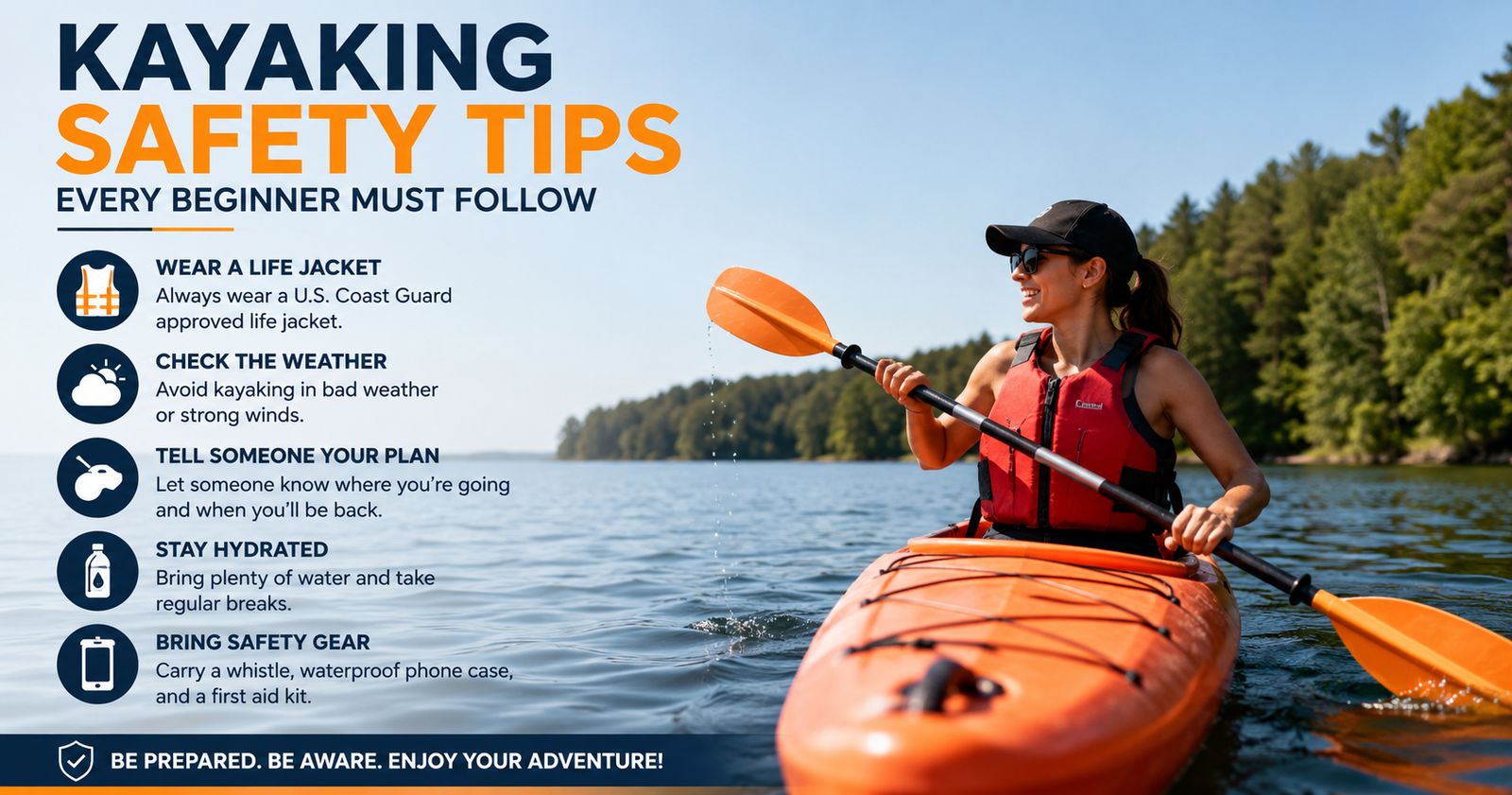
Kayaking is an exciting outdoor adventure for lovers of water sports and nature exploration. Whether you’re paddling across a tranquil lake, along a sluggish river, or in coastal waters, kayaking can be a relaxing or adrenaline-fueled experience. When beginners learn the sport, they tend to neglect the importance of safety. Even a calm sea can become dangerous if someone does not take the proper precautions.
Kayaking Safety: Before you get in the water, knowing safety while kayaking is important. Good preparation, awareness of weather conditions, knowledge of water behavior, and readiness for an emergency can make the difference between a memorable experience and a regrettable situation. Beginners should not take kayaking lightly, without first learning the basic safety measures.
This guide covers the most important kayaking safety tips every beginner must follow to be safe and enjoy the adventure confidently.
Understanding the Importance of Kayaking Safety
Many beginners pay more attention to the purchase of gear and learning paddling techniques, but ignore safety education. Kayaking may look easy, but it can become dangerous very quickly if unexpected factors such as strong currents, sudden weather changes, or equipment problems come into play.
Safety practices aren’t just for pro kayakers. They are a must for everyone but especially for those new to the sport who are still gaining confidence on the water. Creating safe habits early on prevents accidents and improves overall kayaking skills.
Every kayaking trip requires a level of preparation and awareness. Being aware of your environment and respecting the water are important parts of becoming a responsible kayaker.
1. Why Wearing a Life Jacket Is Non-Negotiable
One of the most important safety tips for kayaking is always wear a life jacket. Many accidents happen because paddlers think they are good swimmers or because the water seems calm. In reality, unexpected falls into water can happen in seconds.
In an emergency, a well-fitting personal flotation device (PFD) or life jacket will keep you afloat and help you conserve energy. Swimming in cold water, strong currents or if they panic can be difficult even for experienced swimmers. A life jacket provides you with vital support until help arrives or you can get your kayak under control.
If you are new to kayaking, buy a good quality life jacket that fits snugly but does not restrict movement. It needs to be comfortable enough to wear on the trip because taking it off while kayaking negates its purpose.
Brightly colored life jackets are often recommended because they make you more visible in the water. This can be extremely useful in rescue situations or in low light conditions.
2. How to Pick the Right Kayak for Beginners
The correct kayak is a safety issue as well. Beginners often make the mistake of buying an advanced kayak. One that is made for speed or rough water. Stable recreational kayaks are usually the best platform to learn on.
Kayaks that are wider are easier to balance and steer. Sit-on-top kayaks are particularly good for beginners because they’re easier to get in and out of. They also don’t look as intimidating for those just getting into water sports.
Try before you buy or rent a kayak and you will know how comfortable and stable it is. Beginners should stay away from challenging waters until they feel completely comfortable with handling their kayak.
3. Weather Conditions To Look For Before Kayaking
Weather is a big factor in kayaking safety. One of the biggest mistakes beginners make is not checking the weather forecast before heading out on the water. Especially near oceans, rivers or large lakes conditions can change fast.
Strong winds can push your kayak off course and make paddling difficult. Rainstorms can reduce visibility and create water currents. It is especially dangerous in a thunderstorm . Water is an exposed area and is vulnerable to lightning strikes .
Beginners should always check the weather updates before kayaking and avoid going out when the conditions are unstable. Mornings tend to be calmer, and are thus often safer for beginners, as winds tend to be lighter and water conditions are more predictable.
Another factor that is important is temperature. Even on warm days, hypothermia can occur quickly in cold water. The secret to staying safe is dressing appropriately for both air and water temperatures.
4. Recognizing When Water Conditions Are Hazardous
Another important part of kayaking safety is knowing the water conditions. Calm looking water does not always mean safe water. Beginners should learn hazard identification before getting in the water.
Fast currents are difficult to control and can push kayakers into dangerous areas. Rocks, submerged logs and shallow sections can also cause accidents if not seen early.
Ocean kayaking has extra challenges such as tides and waves. Small waves can also throw off the inexperienced paddler. Rivers can have hidden hazards and changing currents after rain
Beginners should first practice in calm lakes or slow moving rivers. Paddling in easier conditions is a great way to build confidence and your paddling skills before trying more challenging routes.
5. Learning Basic Paddling Techniques
Good paddling technique isn’t just about efficiency, it’s about safety. Paddling improperly can tire you out, lose control and get injured.
A beginner in kayaking needs to understand how to hold the paddle well and keep the right posture. Keep the strokes smooth and controlled to help keep your balance and direction. Jerky or uneven motions can make the kayak unstable.
It’s equally important to learn how to stop, turn and reverse your kayak. The basic maneuvers help kayakers dodge obstacles and react quickly in emergencies.
Taking a beginner kayaking lesson or paddling with experienced paddlers can do wonders for safety and confidence on the water.
6. Never Kayak Alone as a Beginner
While solo kayaking might sound peaceful, beginners should not kayak alone. Having a companion nearby means you get instant help if something goes wrong.
A partner can help if you flip your kayak, help you navigate, or call emergency services if needed. It is generally safer to kayak in a group because you have people around to help you out in case of a tricky situation.
If you are on your own and have to kayak alone, always tell someone your route,expected return time and emergency contacts.
We also highly recommend safety devices such as waterproof phones or whistles.
7. Must-Have Safety Equipment for Beginners
Besides a lifejacket, a number of other safety items are important for kayaking beginners. Having the right equipment can help you deal better with unexpected situations.
A whistle can help to get attention. Waterproof bags will protect phones, maps and emergency supplies. A bilge pump or sponge can help get water out of the kayak.
Sun protection is another safety consideration. The sun on the water can be very drying and can burn you if you are in it too long. Wearing sunscreen, sunglasses and protective clothing helps to reduce these risks.
On longer trips, beginners should also bring drinking water and small snacks to keep up energy and hydration.
8. Understanding What to Do If Your Kayak Capsizes
One of the biggest fears of a new kayaker is to capsize. It can be scary, but the most important step is to stay calm.
If your kayak does flip, don’t panic, and stick with the kayak when you can. The kayak provides buoyancy and is more visible to rescuers than a swimmer in the water.
Practice wet exits and re-entry techniques in shallow water before venturing into deeper areas. You learn these skills in a controlled environment, which gives you more confidence and better reactions when it counts.
If conditions are too severe for re-entry, the safest option is usually to hold onto the kayak and signal for help.
9. Emergency Basics Every Kayaker Should Know
Being prepared for emergencies is part of kayaking safety. If you are a beginner, you should know how to deal with common emergencies before you get out on the water.
Basic first aid is very useful for treating cuts, bruises and minor injuries. Knowing how to recognize hypothermia, dehydration or heat exhaustion can also prevent serious health problems.
Kayakers should be aware of the local emergency contact procedures and the location of the nearest rescue services. It is also a good idea to carry a waterproof flashlight, a first aid kit and an emergency whistle to improve your chances of survival in an unexpected situation.
Self-rescue techniques, knowing them and practicing them regularly, build confidence and preparedness. Safety training classes can also provide valuable information to beginners.
10. Avoiding Alcohol While Kayaking
You don’t drink and kayak. Alcohol impairs balance, coordination, judgment and reaction time, all of which are essential to safe kayaking.
Alcohol is a contributing factor in many water-related incidents as impaired judgment leads to risky behavior and a decreased ability to respond in an emergency.
If you’re a beginner, be extra cautious when kayaking and avoid alcohol before or during.
Building Confidence Through Practice
Kayaking confidence comes slowly through regular practice and safe experiences. Don’t let newbies get on tough routes or difficult water conditions too soon.
You’ll get better at balance, paddling and control with regular practice on calm water. As time progresses, kayak users get more comfortable with dealing with various situations and environments.
Joining local kayaking clubs or instructional groups can be another excellent way for beginners to receive helpful advice and encouragement.
Why Responsible Kayaking Matters
Safe kayaking means protecting yourself, but it also means respecting nature and other people in the water. Responsible kayakers don’t litter, respect wildlife habitats and follow local water rules.
Avoiding boats, swimmers and fishing areas by a safe distance helps to avoid accidents and helps promote a positive kayaking experience for all.
Awareness, patience and preparation are the foundation of responsible kayaking.
How Buzzplanets Helps Adventure Enthusiasts Stay Informed
Buzzplanets is a great place for those who love outdoor adventures and want to get more information about travel, water sports and safety tips. This blog has useful content on many lifestyle and adventure subjects. Readers can stay informed with practical guides and useful insights. Whether you are a beginner kayaker or an outdoor enthusiast, Buzzplanets provides content that is meant to enhance your knowledge and overall experience.
Conclusion
Kayaking is a fun way to explore nature, get fit and have an adventure on the water, but safety should never be overlooked. It is much more likely that novices who train themselves in important safety measures such as wearing a life jacket, checking the weather, understanding how water behaves and being prepared for emergencies will have safe and memorable experiences. Building confidence gradually and practicing responsible kayaking habits can make every trip enjoyable and safe. These essential kayaking safety tips will help beginners build the skills and awareness necessary to venture out on the water with confidence and peace of mind.
FAQs
1. Is kayaking safe for beginners?
Yes, kayaking is safe for beginners when safety measures are taken. Begin in calm water. Wear a life jacket and learn basic paddling skills to dramatically reduce risks.
1. What do you wear kayaking if you are a beginner?
Beginners should wear comfortable, quick-drying clothes, water shoes and a properly-fitted life jacket. You may also need thermal or waterproof clothing in colder conditions.
2. Can you kayak if you can’t swim?
You don’t need to be a strong swimmer to kayak, but wearing a life jacket is a must. Beginners who cannot swim should stay in calm water and go kayaking with experience people.
3. What weather is dangerous to kayak in?
High winds, thunderstorms, heavy rain and very cold water can make kayaking dangerous. Beginners should avoid kayaking in unstable weather.
4. How do beginners prepare for emergencies in kayaking?
If you are a beginner, wear safety gear, learn basic first aid and practice self-rescue techniques before hitting the water. Let someone know where you are going.
Summary
Kayaking is a fun and rewarding outdoor activity, but safety should always be a priority, especially if you are a beginner. Safe kayaking involves wearing a life jacket, knowing the risks of weather, understanding dangerous water conditions, and learning emergency basics. With proper preparation, responsible behavior and frequent practice, you’ll be able to enjoy the adventure with confidence and minimize the risks on the water.