
 By Nick John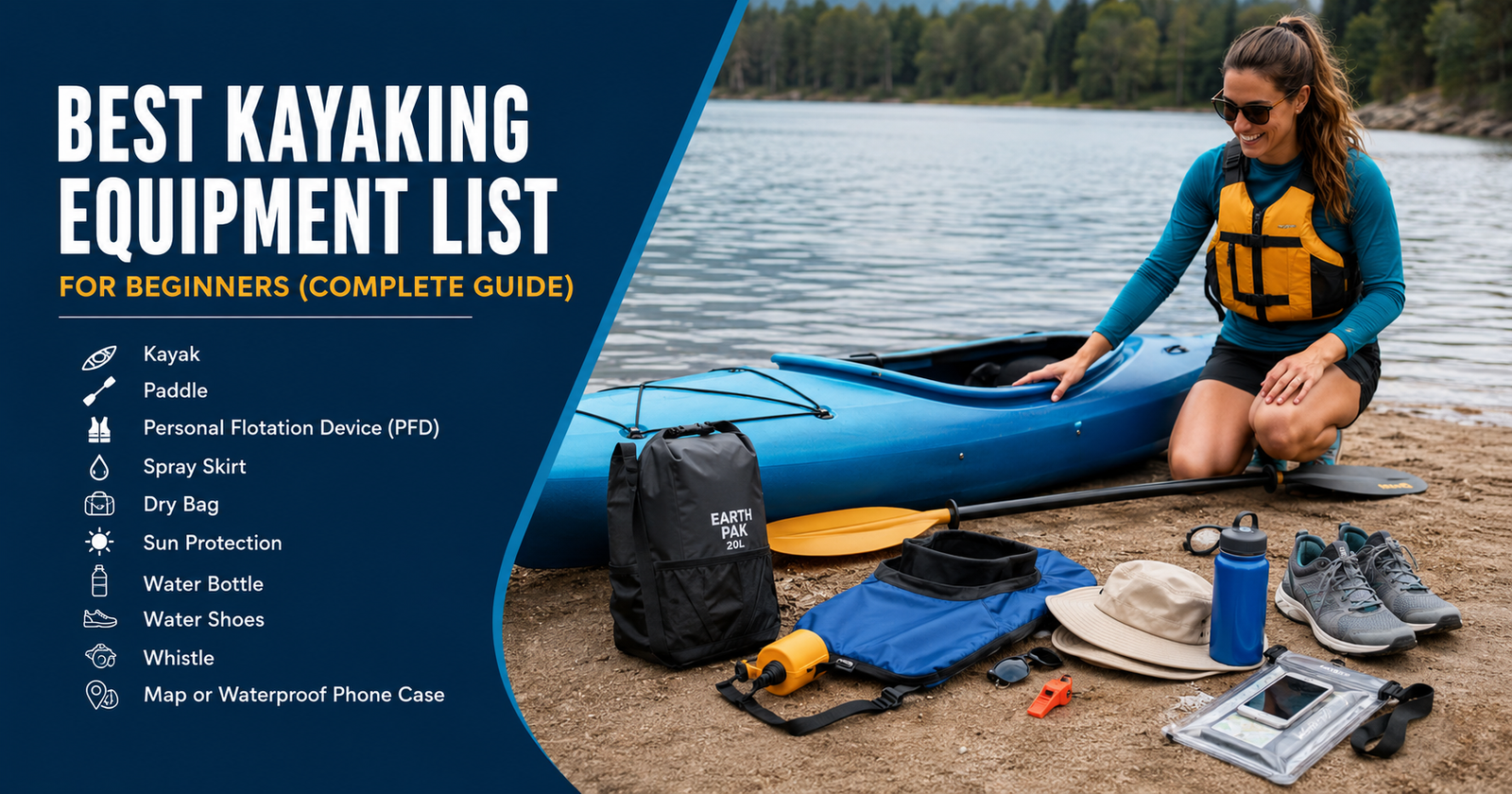
Kayaking is one of the most exciting outdoor activities for people who love adventure, water sports and nature exploration. Whether you paddle on calm lakes, slow rivers or coastal waters, the right kayaking equipment is essential for safety and enjoyment. Newcomers often overlook the importance of the right equipment. They may buy a kayak and forget about the rest of the equipment needed for a smooth adventure.
The right kayaking setup can boost comfort, improve paddling performance and keep you safe in ever-changing water conditions. Good beginner-friendly equipment will also make your learning curve shorter and give you more time to enjoy the ride instead of fighting with poor equipment choices.
The complete guide to the best kayaking gear list for beginners. Types of kayaks, how to choose paddles, helmets, personal floatation devices (PFD), dry bags, and other essential accessories every new kayaker should know.
Understanding the Different Types of Kayaks
The first and most important step for the beginner is choosing the right kayak. Different types of kayaks are made for different water conditions and paddling styles. Knowing these categories will help you to choose the best option for your skill level and intended use.
1. Recreational Kayaks
Recreational kayaks are great for beginners. They are stable, easy to maneuver and designed for calm waters like lakes and slow-moving rivers. These kayaks are generally wider, which makes them more stable and less likely to tip. Most beginners begin with recreational kayaks as they offer a comfortable and relaxed paddling experience.
Many of these kayaks feature large cockpits, making it easier to get in and out of the boat. Great for casual weekend trips and short distance paddling adventures.
2. Touring Kayaks
Touring kayaks are designed for longer trips and paddling in open water. They are longer and thinner than recreational kayaks, which helps them travel faster and track better. They take more skill to control, but for the beginner who wants to paddle regularly, investing in a touring kayak may pay dividends in future growth.
Touring kayaks also feature storage compartments to carry camping gear, food, and other travel essentials.
3. Sit On Top Kayaks
Sit-on-top kayaks are a huge hit with beginners, because they’re so easy to use. Unlike sitting down inside the kayak, paddlers sit on top of it. The kayaks are simple to get back onto if you fall in the water, making them perfect for warm-weather paddling and fishing trips.
Sit on top kayaks are often used in coastal waters and on calm lakes due to their open design.
4. Inflatable Kayaks
Inflatable kayaks are growing in popularity because they are portable and affordable. They are easy to transport, store and blow up when needed. Inflatable kayaks today are incredibly durable, and can be used in all sorts of water.
If you’re a beginner who lives in an apartment or doesn’t have a lot of storage space, an inflatable kayak is a practical option without sacrificing too much performance.
How to Choose the Right Kayak Paddle
Choosing the right paddle is so important that many beginners forget it. However, your paddle has a direct effect on your efficiency, comfort and endurance while you paddle. A bad paddle can wear you out quickly and ruin your overall kayaking experience.
1. Paddle Length Counts
The best paddle length will depend on your height and how wide your kayak is. The wider the kayak, the longer the paddle. The more narrow the kayak, the shorter the paddle. Most beginner paddles are between 210 cm and 250 cm.
Choosing the wrong size paddle could lead to inefficient strokes and shoulder strain. Try different paddle lengths whenever possible before you purchase.
2. Paddle Materials
Kayak paddles are usually made of aluminum, fiberglass, carbon fiber or plastic. Aluminum paddles are cheap and durable, and that’s great for beginners. Fiberglass paddles are lighter and more comfortable to use for long paddling sessions.
Carbon fiber paddles are very light and perform well but are typically expensive. Beginners will often start with aluminum or fiberglass and then move up.
3. Blade Shape and Design
The shape of paddle blades is important for paddling efficiency and control. Larger blades generate more power per stroke, but smaller blades allow for a more fluid (and less tiring) paddling motion over long distances.
The medium size blades are the most comfortable and powerful and are the most preferred by most beginners.
Why a Personal Flotation Device (PFD) Is Essential
A personal flotation device (PFD), also known as a life jacket, is one of the most important pieces of kayaking gear. All kayakers, regardless of swimming ability, should wear a properly fitted PFD at all times.
Modern kayaking PFDs are designed for mobility and comfort. They provide free movement and yet good buoyancy in case of emergencies.
Choosing the Right PFD
Beginners should select a Coast Guard-approved PFD designed for paddlesports. These life jackets have bigger arm openings and light-weight materials for extra comfort when paddling.
The PFD should be snug but not tight enough to restrict breathing or movement. Adjustable straps ensure a secure fit and keep the jacket from moving around in the water.
Features to Look For
Many kayaking PFDs offer useful features such as storage pockets, hydration compatibility, reflective strips and ventilation panels. Storage pockets are handy for small safety items such as whistles, snacks or waterproof phones.
Comfort is crucial because poorly fitting PFDs can tempt novices to take them off, which is a needless risk.
1. The Importance of Wearing a Kayaking Helmet
Helmets are often considered whitewater kayaking gear, but they are safety equipment that is valuable in many kayaking environments. Rocks, shallow rivers, falls and bashes can cause serious head injuries.
If you are just starting out and paddling in rivers, rapids or rocky coastal areas, you should always wear a helmet designed for watersports.
2. What Makes a Good Kayaking Helmet
A good kayaking helmet should protect all of your head, but also be light and comfortable to wear. It also needs to have adjustable straps and drainage holes for a good fit.
Kayak helmets, unlike bicycle helmets, are designed to stay on your head in strong currents and to withstand repeated impact with the water.
3. Comfort and Ventilation
Ventilation is a big part of overall comfort, especially on summer paddles. Helmets are well ventilated so you don’t overheat but still offer good protection.
For beginners comfort is key – an uncomfortable helmet can hinder paddling performance and concentration.
4. Dry Bags: Keep Your Essential Gear Safe
Dry bags are an essential item on every kayak gear checklist. Since kayaking is an activity where you naturally come into contact with water, it’s crucial to keep your personal items dry.
Dry bags are waterproof storage bags that are used to keep electronics, clothes, food and valuables safe in case that kayak flips over.
5. Selecting the Correct Dry Bag Size
They come in a variety of sizes from small pouches to large expedition bags Beginners usually do better with several sizes rather than one big bag.
Small dry bags are good for phones, wallets and keys and bigger bags can carry towels, extra clothing and camping gear.
6. Waterproof Material and Seal Quality
Good dry bags are made from tough waterproof materials such as PVC or nylon and have roll top sealing systems. The roll-top design prevents water from getting in, even if you get splashed or accidentally drop it in water.
Investing in quality dry bags gives you long-term protection and dependability for your outdoor pursuits.
Essential Kayaking Clothing for Beginners
Proper clothing increases comfort and safety during kayking by a mile. Beginner should steer clear of cotton as it retains water and takes a while to dry.
For this, synthetic materials that dry quickly are best, as they regulate body temperature and are comfortable even when wet.
1. Dressing for Weather Conditions
Kayaking in warm weather may require lightweight shirts, water shoes, sunglasses and sun protective clothing. In colder water you’ll need a wetsuit or a dry suit to avoid hypothermia.
For beginners, layering clothes is an easy way to adapt to the changing weather throughout the day.
2. Footwear Considerations
Water shoes or sandals with secure straps are best for kayaking. The shoes grip slippery surfaces and protect your feet from rocks, shells and other underwater obstacles.
Avoid loose flip-flops that can easily slip off in the water.
Safety Accessories Every Novice Should Have
Besides the necessary kayaks equipment, there are a handful of small accessories that go a long way towards safety and convenience.
A whistle is a simple, but important, emergency signaling device. The majority of PFDs feature built-in whistle attachments for quick access in emergency situations.
A bilge pump is used to pump water out of sit-in kayaks. Beginners paddling longer distances may also carry paddle leashes, tow ropes, navigation lights and waterproof first-aid kits.
Sun protection is just as important. Sunscreen, polarized sunglasses and hats prevent sunburn and improve visibility during long hours on the water.
Learning Proper Kayaking Techniques
Good paddling technique and safety awareness will always be more important than any kayaking gear. If you are new to kayaking, it is a good idea to take an introductory course or practice your basic skills in calm water before attempting more advanced environments.
Learning efficient paddle strokes, turning techniques, self rescue methods and water safety rules increases confidence and decreases accidents.
You’ll also conserve energy for longer trips by practicing controlled movements.
Planning Your First Kayaking Adventure
Before going onto the water, beginners should always check weather forecasts, water conditions and local safety regulations. Don’t go kayaking in strong winds, storms or rough currents unless you have enough experience.
Start with short trips on calm lakes or slow-moving streams to develop confidence gradually. As an added precaution, let someone know where you are paddling and when you expect to return.
Also, bringing along snacks, water, and communication devices makes for a more comfortable and prepared kayaking experience.
Why Beginners Should Invest in Quality Equipment
A common mistake beginners make is trying to save money by buying very cheap kayaking equipment. But, the equipment is often of bad quality, not durable enough, not comfortable enough and not safe enough.
Good starter gear makes learning safer, better and more fun. Good equipment also lasts longer, saving you from frequent replacements.
Confidence comes from being confident in your gear and that is especially important for beginners learning new outdoor skills.
Explore Outdoor Adventure Content on Buzzplanets
If you love outdoor adventures, travel activities and beginner-friendly guides, Buzzplanets is a great place to find information on travel tips, adventure sports, outdoor equipment recommendations, lifestyle topics and more. Buzzplanets features educational articles for beginners and enthusiasts who want to kayak, hike, camp, or find new travel destinations to make better decisions for their next adventure.
Frequently Asked Questions
1. What type of kayak is best for beginners?
Beginners will generally find recreational kayaks and sit-on-top kayaks to be the best choices as they are stable, comfortable, and easy to use on calm water.
2. Do beginners need a helmet for kayaking?
Do you wear helmets when kayaking as a beginner? Yes, beginners should wear helmets when kayaking in rivers, rocky areas or whitewater environments to protect against head injuries.
3. How to determine the size of a paddle?
Paddle size is dependent on your height and kayak width. Most beginner paddles are 210 cm to 250 cm, but testing out different lengths will help you find out what works best.
4. Are inflatable kayaks good for a beginner?
Inflatable kayaks are a good choice for beginners, being portable, inexpensive and easy to store, whilst still offering good stability.
5. What do I put inside a dry bag?
Protect important items like phones, wallets, keys, extra clothing, food, towels, and emergency supplies by storing them in dry bags to prevent water damage.
Summary
Kayaking is a fun and rewarding outdoor activity, but beginners need to pay attention to picking the right gear to stay safe and enjoy themselves. Choosing the right kayak type, paddle, PFD, helmet, and dry bag creates a strong foundation for successful paddling adventures. Quality gear improves comfort, boosts confidence, and helps beginners develop their kayaking skills safely. With the right preparation and equipment, kayaking can become a lifelong outdoor passion filled with exploration and adventure.