
 By Nick John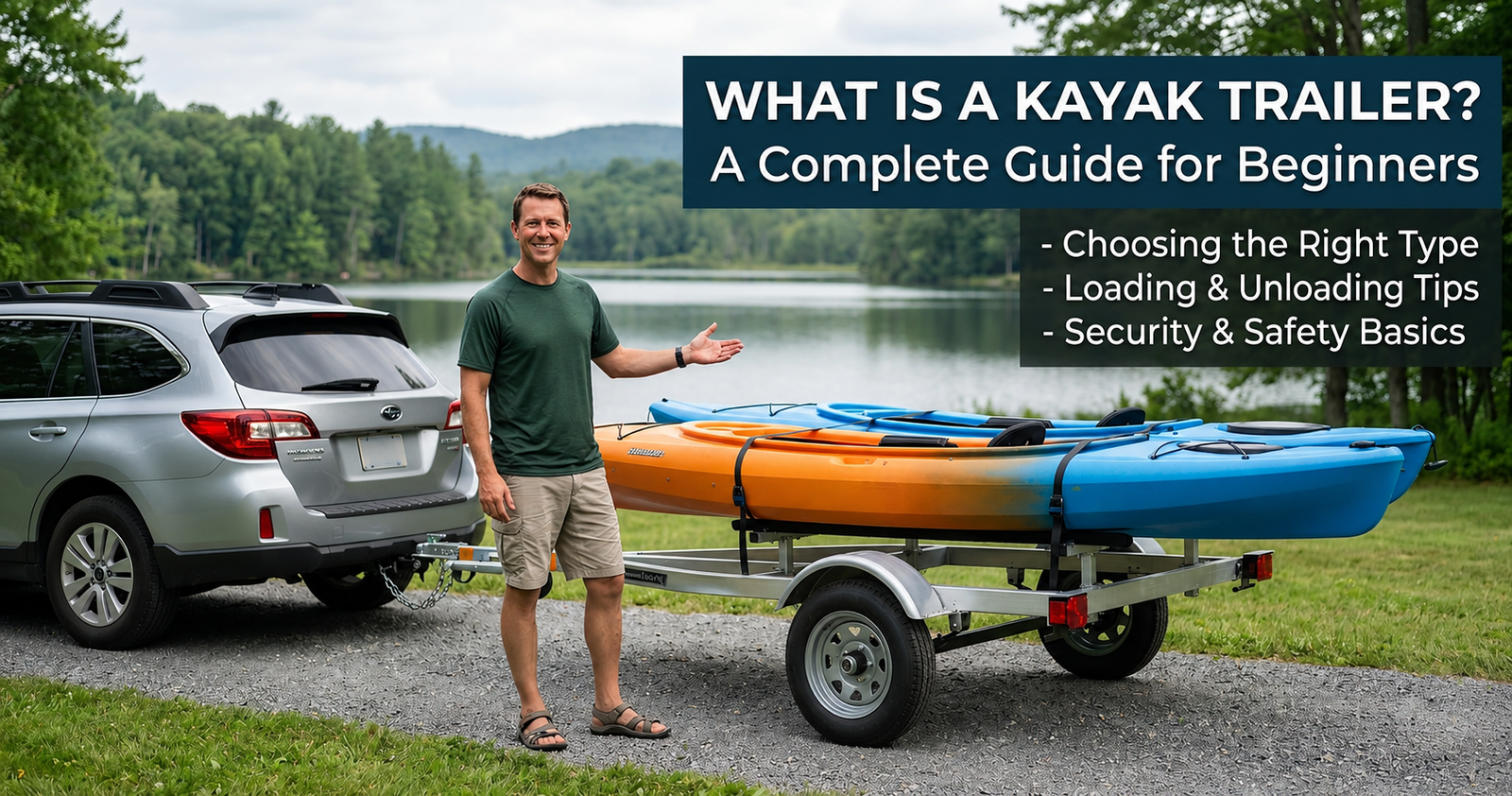
One of the very first questions any paddler will have is how to safely transport a kayak. A lot of beginners begin by putting their kayak on the roof rack of a vehicle, but that’s not always practical. Loading a heavy kayak onto the top of an SUV or truck can be a workout, especially if you are a solo paddler. Longer distances, multiple kayaks and larger fishing kayaks add complexity. A kayak trailer is a great solution.
A kayak trailer is a trailer for carrying one or more kayaks behind a vehicle. It’s a safe, easy way to move your gear without the hassle of lifting it over your head. If you’re heading to the local lake for a relaxing paddle or a multi-day adventure across state lines, having the right trailer can make your trip a lot easier. Before hitting the water, be sure to follow these kayaking safety tips for beginners to ensure a safe and enjoyable paddling experience.
If you are new to this, it is important to know how kayak trailers work, who needs one and what types there are before you buy one. This guide will walk you through everything you need to know so that you can determine if a kayak trailer is the right investment for your outdoor adventures.
What is a Kayak Trailer?
A kayak trailer is a specialized towable platform that connects to a vehicle with a trailer hitch. Your kayaks will be transported behind your vehicle at a much lower height than if you were to put them on the roof of your car, making loading and unloading much easier.
Most kayak trailers are built with a sturdy metal frame, adjustable support bars, padded cradles, tie-down points and weather-resistant wheels. Depending on the model, they can haul from one kayak up to over ten kayaks. Personal trailers generally carry between one and four kayaks, whereas commercial trailers used by outfitters and rental businesses are built for much greater capacities.
Modern kayak trailers are designed to minimize movement when you’re transporting your kayak. Proper straps and supports for the kayak ensure it is safe whether you are driving on highways or rugged roads. Many trailers also fit extra outdoor gear like canoes, paddle boards, bicycles, camping gear or storage boxes.
Kayak trailers are specifically designed to support the unique shape of kayaks, unlike general-purpose utility trailers. They help to reduce pressure points and protect the hull during transport.
How Does a Kayak Trailer Work?
The principle of a kayak trailer is very simple. Trailer easily attaches to your vehicle’s hitch receiver. When attached, your kayaks are placed on padded racks or cradles and tied down with heavy duty straps. The trailer glides behind you when you drive your car .
Most trailers have suspension systems that absorb the vibrations of the road and reduce the impact of bumps. This helps protect expensive kayaks from unnecessary stress while they are being transported.
Many high-end trailers also have adjustable crossbars, lockable storage compartments, waterproof bearings, LED lighting systems and corrosion-resistant finishes. These additions offer both improved convenience and better long-term durability.
Because the trailer sits much lower than a vehicle’s roof, even large fishing kayaks that weigh over 100 pounds can often be loaded by one person without assistance.
Why Are Kayak Trailers Becoming More Popular?
Kayaking has grown tremendously over the last decade. As the recreational, touring, fishing and tandem kayak market grows, the need to transport them safely becomes more important.
Fishing kayaks are significantly heavier than regular recreational kayaks due to the additional seats, pedal drive systems, storage, fish finders, batteries and other accessories. Getting these on a roof rack can be tricky and sometimes un-safe.
Kayak trailers are also popular among families as they can carry more than one boat at a time without needing multiple vehicles. Trailers are more suitable for adventure enthusiasts, who travel for long distances often. It saves loading time and protects expensive equipment better.
Trailers are a good alternative to moving larger watercraft because many modern crossovers and electric vehicles have lower roof weight limits.
Who Needs a Kayak Trailer?
Not all kayakers need a trailer but for many paddlers it becomes one of the most useful pieces of gear they own.
Regular weekend paddlers usually get the biggest benefit. Lifting a kayak up onto a roof rack several times can be tiring over time. The entire process is much easier with a trailer and it lends itself to more spontaneous trips as loading only takes a few minutes.
Trailers are especially useful for owners of fishing kayaks. These boats typically weigh between 70-150 pounds before equipment is loaded. Using a trailer to transport them takes the physical strain out of the process and protects both the kayak and the vehicle.
Families who enjoy paddling together often need to carry multiple kayaks at one time. Instead of two vehicles or complicated roof rack systems, a single trailer will often carry all the boats you need.
Reduced lifting height may also be appreciated by older adults or paddlers with less upper-body strength. Much safer than lifting heavy equipment over your head . Loading from waist height.
In the outdoor world, kayaking clubs, rental businesses, schools and adventure companies almost always turn to trailers to efficiently get multiple kayaks from place to place.
Situations Where a Kayak Trailer Makes the Most Sense
Your kayaking habits will have a lot to do with whether a trailer is worth it.
If you do a lot of local trips and have a lightweight recreational kayak, a roof rack may be all you need. But if you’re driving several hours to rivers, coastal destinations or national parks, a trailer can make it a lot more convenient.
Trailers are also popular with camping fans who like to combine kayaking with longer outdoor adventures, as there is still space on the roof for cargo boxes, bicycles or rooftop tents.
Photographers, anglers, and expedition paddlers hauling lots of gear also appreciate the extra storage flexibility that trailers provide.
Types of Kayak Trailers
There are a variety of kayak trailer designs available, each designed for specific user and transportation needs.
1. Single Kayak Trailers
Single kayak trailers are the easiest to find. The kayak carriers are made to carry one kayak, are lightweight, compact and easy to maneuver. These trailers are perfect for solo paddlers who want a less-expensive alternative to roof racks without going up to a larger system.
They are generally lower maintenance and easier to store when not in use due to their smaller size.
2. Multi-Kayak Trailers
Multi-kayak trailers are designed to carry several kayaks at once. They usually have multiple tiers of racking to allow maximum storage while remaining stable while being transported.
These trailers are perfect for families, kayaking clubs, guided tours, rental businesses and outdoor organizations. Depending on design, they can securely hold anywhere from four to twelve kayaks.
Many multi-kayak trailers have adjustable rack spacing so they can be set up to carry different lengths and widths of kayaks.
3. Utility Kayak Trailers
Utility trailers give you more flexibility to carry kayaks and other cargo at the same time. They often have removable racks so that when not hauling kayaks they can be used to haul camping equipment, bikes, landscaping supplies, or household goods.
For the outdoors person who likes many different types of recreation, a utility kayak trailer is a great value because it has multiple uses throughout the year.
4. Stacker Kayak Trailers
Stacker trailers save space by storing kayaks vertically instead of horizontally, maximizing carrying capacity. The design allows for many boats to fit into a relatively small footprint.
Commercial outfitters, schools, camps, and rental companies often prefer stacker trailers because they make it easy to transport large fleets without the need for large trailers.
However, these trailers require careful loading techniques but are second to none when it comes to efficiently transporting a lot of kayaks.
5. Custom Kayak Trailers
There are also paddlers who choose to have trailers custom built to suit their needs. Lockable storage areas, enclosed cargo areas, lighting, spare tire mounts, adjustable racks, and special holders for paddles, fishing rods, or paddleboards might all be included in these trailers.
Although custom trailers cost more, they offer unparalleled convenience for avid outdoorsmen who spend a lot of time on the water.
How to Choose the Right Kayak Trailer
Your intended use is the biggest factor in choosing which trailer. Your starting point should be the number of kayaks you own, but future needs are just as important. It’s usually smart to buy a trailer that’s just a little bigger than you need now, as your collection expands.
Also, weight capacity must be thought about carefully. ALWAYS count the total weight of the kayaks, paddles, fishing gear, coolers, camping gear and any other items you plan to haul.
Trailer construction is a large part of durability. Untreated steel corrodes much more readily than galvanized steel and aluminum frames, making them the best choice for paddlers who often frequent saltwater environments.
Another important factor is the suspension quality. A smooth suspension system will minimize vibration and reduce stress on your kayaks on long drives, extending the life of your trailer and your gear.
Finally, think about where the trailer will be stored when it’s not in use. Compact or collapsible designs are especially helpful for homeowners with limited garage or driveway space.
Kayak Trailer vs Roof Rack
One of the most frequently asked questions by beginners is “Should I get a kayak trailer or just use a roof rack?” That answer depends on a few things, like how many kayaks you own, how often you paddle, how heavy your kayaks are and how much space you have to store them.
One of the first transportation options for new kayakers is a roof rack, because it’s relatively cheap and doesn’t require towing. A roof rack might be perfectly adequate for lightweight recreational kayaks in the region of 20-30kg. If you paddle a few times a year and travel short distances, then loading your kayak on the roof is probably not too much of an inconvenience.
But the roof racks aren’t so practical with larger, heavier kayaks. It is very hard to get fishing kayaks, tandem kayaks and fully rigged expedition kayaks over shoulder height. There is also the physical effort involved, not to mention the risk of scratching your vehicle or damaging the kayak during loading.
This is where the kayak trailer comes in, solving these problems by letting you load your kayak at waist level. This makes the process faster, safer and a lot less physically demanding. You also don’t add any more weight to the top of your vehicle which can help with fuel efficiency and also reduce wear and tear on your roof rack system.
Trailers also have the added benefit of transporting multiple kayaks without crowding your vehicle. Families, groups of friends or kayaking clubs can carry several boats on a single trailer and still have plenty of room in the vehicle for passengers and gear.
That said, trailers do require some additional maintenance. Make sure to check the tires, wheel bearings, lights and hitch components on a regular basis. You’ll also need to get used to towing with a trailer, and reversing into parking spots, which can take some practice.
A roof rack still makes sense for the occasional paddler with a single lightweight kayak. If you kayak a lot, have more than one kayak, or haul around heavy fishing kayaks, a trailer will probably be the better long-term investment.
Benefits of Using a Kayak Trailer
One of the best aspects of kayak trailer ownership is the convenience. After a long day on the water, instead of wrestling with a kayak to get it onto your roof, you simply slide it onto the trailer and strap it down. This saves you time and energy before and after every trip.
A trailer also gives your kayak more protection. Good trailers have padded supports that distribute the weight evenly across the hull. The suspension system absorbs the vibrations from the road during transport of the kayak which reduces stress on the kayak and helps prevent dents or deformation.
Loading is also much safer. The trailer sits lower than the roof of your vehicle, so you’re unlikely to drop the kayak or injure yourself trying to lift it over your head. This is especially beneficial for solo paddlers and older adults.
Another big plus is the storage capacity. There’s plenty of room on lots of trailers for paddles, life jackets, dry bags, fishing equipment, coolers, camping gear and even bikes. Some models have lockable storage compartments to keep your equipment safe as you travel.
Trailers also add to the flexibility of travel. A free roof means you can add a rooftop cargo box or take more outdoor gear without sacrificing your kayak transportation system.
If you travel a lot, you’ll love trailers to make long distance road trips easier. Loading and unloading is faster, you tire less, and you can more easily take advantage of spontaneous kayaking adventures.
Potential Drawbacks to Consider
There are lots of benefits to kayak trailers, but they aren’t for every paddler.
The original cost is generally higher than that of a roof rack system. In addition to purchasing the trailer itself, you may also need to install a trailer hitch on your vehicle if it doesn’t already have one.
Storage can be another issue. Trailers need to be parked when not in use, whereas roof racks do not. Homeowners with small garages or limited driveway space should consider carefully where they will store the trailer.
Drivers also have to get used to towing. Lightweight kayak trailers are pretty easy to pull, but backing up and parking with a trailer takes practice. A few trips are usually enough to get most users comfortable.
Maintenance is an additional continuous responsibility. Properly inflated tires, lubricated bearings, checked lights and inspected straps all help towards safe transportation.
In spite of these few drawbacks, most kayakers who use their kayaks often find that the convenience and versatility of a trailer far outweighs the extra responsibilities.
Things to Consider When Buying a Kayak Trailer
There is more to selecting the proper kayak trailer than just finding the cheapest price. You need to choose something that suits your needs now and has capacity for growth.
First, take stock of your tow vehicle. Make sure it has the right trailer hitch and proper towing capacity. Fortunately, most kayak trailers are fairly lightweight and can be towed by regular passenger cars, SUVs, and pickup trucks.
Think about what types of kayaks you own. Recreational kayaks, fishing kayaks, sea kayaks, inflatable kayaks, and tandem kayaks have different dimensions and weight requirements. If your collection changes over time, a trailer with adjustable racks offers you more flexibility.
Materials used in construction matter too. Aluminum trailers are lightweight and naturally corrosion-resistant, which makes them a great choice for coastal environments. Galvanized steel offers durability and rust resistance as well.
Take a close look at the trailer’s suspension, tires, wheel bearings, and lights. Good components make for smoother transport and less maintenance through the years.
And finally, see what accessories are available. Spare tire mounts, storage boxes, adjustable cradles, locking systems, and foldable frames can make a world of difference in day-to-day usability.
Tips on Safe Loading Practices
Proper loading techniques are the first step to safe transportation. Load the kayak only as the manufacturer recommends, and be sure to spread the weight evenly on the trailer.
Use good-quality cam straps instead of regular ropes if you can. Secure the straps firmly enough to prevent movement, but do not over-compress the hull.
Check all the straps before you set off on your trip, and check them again after you have travelled a short distance. The tie-downs may loosen up in the first few miles due to road vibrations.
Check your trailer lights, and make sure the tires are properly inflated before every trip. Regular inspections prevent unexpected problems on the road.
Driving with a trailer requires some different habits, too. Accelerate slowly, give yourself more distance to stop, and take corners more slowly than you normally would.
Keeping Your Kayak Trailer in Shape
Proper maintenance will keep your trailer running safely for years to come.
After trips to muddy trails or saltwater environments, wash the trailer. Salt residues, if untreated, can accelerate corrosion.
Check the tires for uneven wear. Keep the correct amount of air in the tires as recommended by the manufacturer. Good tires make you safer and save gas.
The wheel bearings should be lubricated periodically, especially if the trailer is submerged often when launching boats near the water.
Inspect straps, bolts, fasteners, and lighting connections before each kayaking season. The sooner you replace the worn parts, the less you will spend on the repairs.
If you can cover the trailer or put it indoors, this will increase the life of the trailer by keeping it out of the sun, rain, and snow for long periods of time.
Other Kayaking Guides on Buzzplanets
Good information makes every trip safer and more enjoyable for new kayakers, and planning your next outdoor adventure. Buzzplanets provides insightful guides on kayaking tips, beginner tips, gear advice, outdoor travel tips, safety tips, and adventure inspiration for paddlers of all levels. Buzzplanets delivers practical and easy-to-follow outdoor content, whether you want to hone your skills or make smarter buying decisions.
Conclusion
A kayak trailer is more than just a transport accessory. It’s an investment that will make kayaking easier, safer, and more enjoyable. As your paddling love grows, so do the benefits of trailers, from cutting down on the physical labor of loading heavy kayaks to ensuring your boats are safe in transit.
Roof racks are great for the occasional user with light-weight kayaks, but trailers provide unmatched convenience for families, anglers, frequent travelers, and anyone moving around larger boats. Knowing the different types of trailers, assessing your transport needs, and selecting a quality model will set you up for years of hassle-free kayaking adventures.
Summary
A kayak trailer is a trailer specifically designed to carry your kayaks safely behind your vehicle. It’s easier to load, safer, has more space and is more convenient than conventional roof racks. Whether you’re a beginner with one kayak or a seasoned paddler with several boats, the right trailer for you will depend on your kayaking habits, vehicle compatibility, and future needs.
Frequently Asked Questions
1. Is a roof rack better than a kayak trailer?
If you’re paddling often, or if you’re a family or the owner of a heavy fishing kayak, a trailer is generally the most convenient way to go. It makes loading easier, and it can safely haul more than one kayak.
2. Can all cars pull a kayak trailer?
Most small kayak trailers are lightweight and can be towed by many cars, SUVs, and pickup trucks, provided the vehicle has the proper trailer hitch and the appropriate towing capacity.
3. How many kayaks can fit in a trailer?
Capacity is dictated by trailer design. Personal trailers typically carry one to four kayaks, whereas commercial trailers can carry ten or more.
4. Are kayak trailers low maintenance?
Yes. Regular inspection of tires, wheel bearings, lights, straps, and hitch components will ensure safe operation and extend the life of the trailer.
5. Are kayak trailers worth the money?
A kayak trailer can save you time, reduce physical effort, and provide safer, more convenient transportation if you kayak often, have more than one kayak or heavy kayaks, or travel great distances, making it a worthwhile long-term investment.