
 By Nick John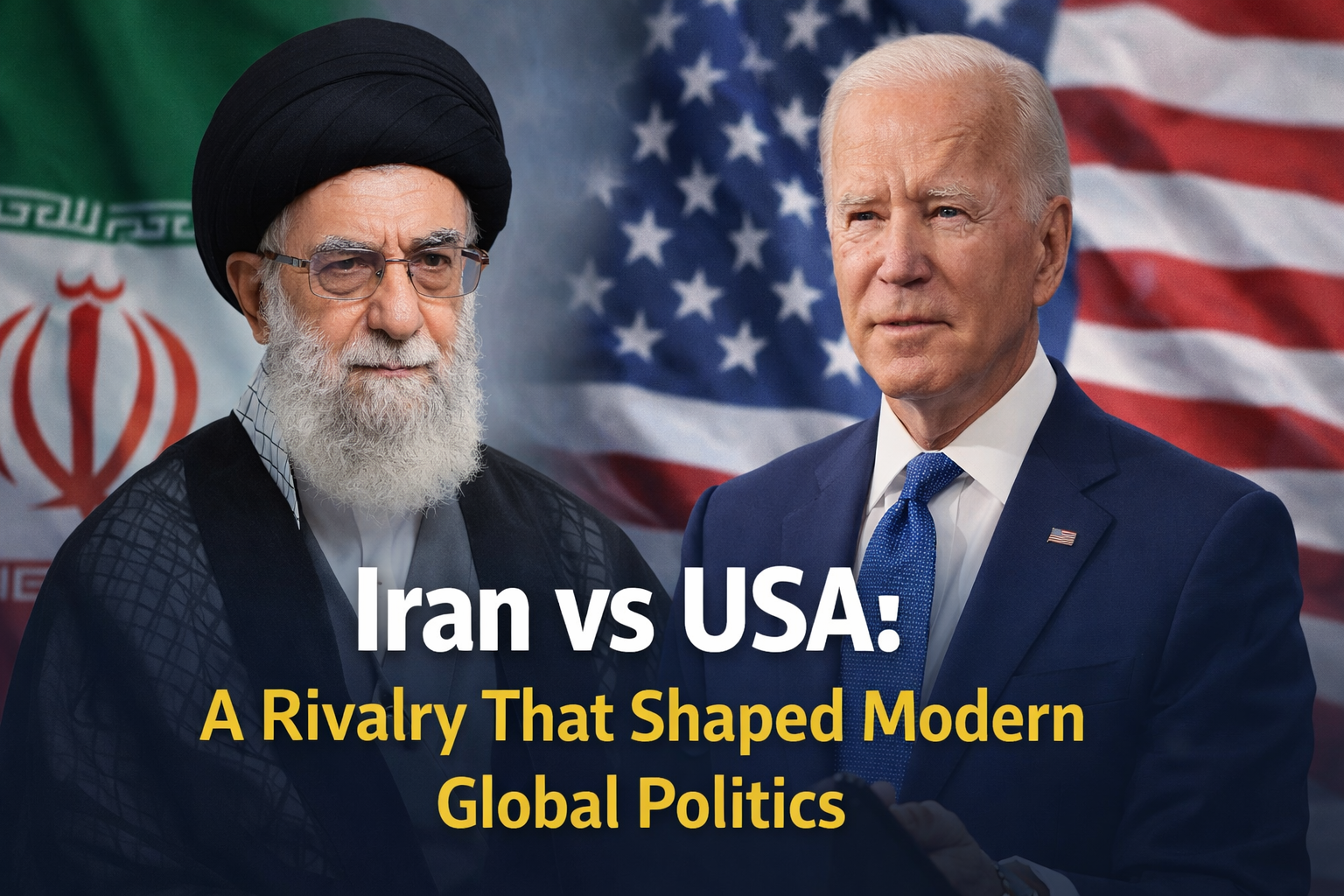
The rivalry between Iran and the United States is one of the most complicated and important ones in modern international politics. This is not a traditional war fought on battlefields; it is a long-term conflict that includes ideology, diplomacy, economic sanctions, military posturing, and regional influence.
It is important to understand the conflict between Iran and the United States because it affects the Middle East, global energy markets, efforts to stop the spread of nuclear weapons, and even everyday geopolitics that affect countries far beyond the region. Even when they tried to talk things out, mistrust has always been the main thing that has defined their relationship.
This article clearly and logically explains the Iran–USA conflict, including its historical roots, political aspects, economic effects, military tensions, and possible future outcomes.
The Beginning of Their Relationship
1. Friendship in the Early 20th Century
Before things got worse, the US and Iran had fairly friendly relations. In the early 1900s, people in Iran thought well of the U.S., especially when compared to European colonial powers like Britain and Russia. American teachers, engineers, and advisors worked in Iran to help modernize schools and other institutions.
Iran became an important U.S. ally in the Middle East while Shah Mohammad Reza Pahlavi was in power. During the Cold War, the US gave Iran military and economic support because it saw Iran as a way to keep Soviet influence in check.
2. The Coup of 1953 and Its Long-Term Effects
In 1953, a coup backed by the U.S. and the UK overthrew Iran’s democratically elected Prime Minister, Mohammad Mossadegh. This was a big turning point. The main reason was economic and strategic: Mossadegh had nationalized Iran’s oil industry, which was bad for Western interests.
This event made the Shah’s rule stronger, but it also made Iranians very angry. Many people thought that the United States was interfering with Iran’s independence, and this idea still affects Iranian politics today.
The Iranian Revolution of 1979: The Last Straw
1. The Shah’s Regime Fell Apart
The Iranian Revolution of 1979 changed Iran’s political system completely. People were unhappy with authoritarian rule, economic inequality, and Western influence, which led to the Shah’s overthrow. Ayatollah Ruhollah Khomeini became the head of a new Islamic Republic.
This revolution was the final straw in the relationship between Iran and the US. The new leaders of Iran saw the United States as the main sign of foreign control and moral decay.
2. The Hostage Crisis at the US Embassy
In 1979, Iranian students broke into the U.S. Embassy in Tehran and held 52 American diplomats hostage for 444 days. This event shocked the world and ruined relationships for good.
The U.S. saw the hostage crisis as a breach of international law. Iran saw it as revenge for years of meddling. They broke off diplomatic ties, and they have never been fully restored.
The conflict is based on differences in ideology and political systems that are directly opposed to each other.
The main reason for the fight between Iran and the US is their different ideas. The United States supports a capitalist economy, secular government, and liberal democracy. Iran, on the other hand, has a unique Islamic political system in which religious authority is very important to the government.
It’s very hard to trust each other when we have such different views of the world. Both sides think that the other side is a threat to their basic values and long-term safety.
3. How People See Power and Control
The U.S. thinks of itself as a stabilizer in the world, while Iran thinks of the U.S. military presence in the Middle East as an imperial overreach. Iran thinks it is fighting against being controlled, but the U.S. thinks it is stopping Iran from acting in ways that could cause problems.
The Nuclear Problem and Global Worries
1. A Look at Iran’s Nuclear Program
Iran says its nuclear program is for peaceful uses, like making energy and doing medical research. The U.S. and its allies, on the other hand, are worried that Iran wants to make nuclear weapons, which could make the region less stable.
In the early 2000s, fears grew when undeclared nuclear facilities were found in Iran, which made people wonder about openness.
2. The Nuclear Deal and What Went Wrong
Iran and a number of major world powers signed a historic nuclear deal in 2015. The deal was meant to limit Iran’s nuclear activities in exchange for lifting sanctions. For a short time, things calmed down and Iran was able to get back into some global markets.
The U.S. later pulled out of the deal, though, and the harsh sanctions were put back in place. This choice brought back tensions and caused Iran to slowly back out of its obligations under the deal.
Economic Sanctions: A Weapon That Doesn’t Speak
1. What Sanctions Do to Iran
The United States uses economic sanctions against Iran as one of its main tools. These sanctions are aimed at oil exports, banking systems, and trade with other countries. Because of this, Iran’s economy has been hurt by rising prices, joblessness, and a drop in the value of its currency.
These measures often hurt regular people the most, as they have to pay more for things they need and have trouble getting them.
2. How Iran Responded to Economic Pressure
Iran has tried to create a “resistance economy” by making more things at home and strengthening ties with partners outside of the West. This has made some people less dependent, but sanctions still make it very hard for the economy to grow.
Proxy Wars and Military Tensions: Direct Conflict Avoided, Indirect Conflict Common
Even though they have been enemies for decades, Iran and the US have never gone to war. Instead, their competition shows up in proxy wars in places like Iraq, Syria, and Yemen.
Iran backs different groups in the region to increase its power, while the U.S. backs groups that oppose Iran to keep its power in check.
1. Things That Set off Fights in the Persian Gulf
There have been a lot of problems in the Persian Gulf, including oil tankers, military drones, and naval battles. These events show how quickly things can get tense, even without a war.
The Part That Media and Public Opinion Play
1. How stories Change the Conflict
The way the media in both countries shows things makes hostility worse. People in the United States often think of Iran as a big threat to security. People in Iran see the U.S. as aggressive and unfair.
These stories change how people think, which makes it politically dangerous for leaders on both sides to make deals.
Effects on the Region and the World
1. Effect on the Middle East
The rivalry between Iran and the US affects almost every major conflict in the Middle East. Allies in the region often have to choose sides, which makes things more divided and unstable.
2. What Happens to the World’s Energy Markets
Iran is a big oil producer, and sanctions or military tensions can make it hard for the world to get oil. This has a direct effect on energy prices around the world, which hurts economies all over the world, not just in the Middle East.
The Path to Diplomacy or Escalation: Is Reconciliation Possible?
There have been times when diplomacy has worked, even though hostility is the norm. Backchannel talks, prisoner exchanges, and negotiations show that dialogue is possible, but it is not strong.
For real reconciliation to happen, both sides would have to make concessions, build trust, and understand each other’s security concerns.
Risks of Ongoing Confrontation
The risk of making a mistake is still high without diplomacy. One event could lead to a bigger fight with effects around the world.
A Message for Our Readers
If you want to read more in-depth articles about world politics, new trends, and big global events, Buzz Planets (buzzplanets.com) is a good place to go. They publish interesting articles about these topics on a regular basis. It’s a useful tool for people who want things to be clear without being too complicated.
FAQs
1. What makes Iran and the US enemies?
The hostility comes from things that happened in the past, like the 1953 coup, the 1979 Iranian Revolution, differences in ideology, and ongoing arguments over nuclear programs and regional power.
2. Is there a war between Iran and the United States right now?
No, they are not fighting. But they are still in a state of intense competition that includes sanctions, proxy wars, and diplomatic stalemates.
3. What part do sanctions play in the fight?
Sanctions are a big part of the U.S. strategy to put pressure on Iran both economically and politically, especially when it comes to its nuclear activities and actions in the region.
4. Will diplomacy be able to settle the fight between Iran and the US?
Diplomacy can ease tensions, but a lasting solution will need both sides to work hard, make concessions, and trust each other.
5. What does this fight mean for regular people?
It affects civilians by making life harder for them in Iran, raising energy prices around the world, and making the region less stable.
Conclusion: A Competition With No Easy Solutions
The conflict between Iran and the United States is not a simple disagreement; it is a complex rivalry that has been shaped by history, ideology, economics, and power politics. Years of not trusting each other have made both sides’ positions stronger, making it hard to find a solution, but not impossible.
This relationship helps us understand a lot of the tensions in the world today and shows how important diplomacy is in a world where fighting can be very dangerous.
Summary
The rivalry between Iran and the US has been going on for a long time and is based on historical events, ideological differences, nuclear concerns, and power struggles in the region. While neither country wants to go to war, tensions stay high because of sanctions, proxy wars, and diplomatic standoffs. The outcome of this relationship still affects stability in the Middle East and politics around the world.