
 By Nick John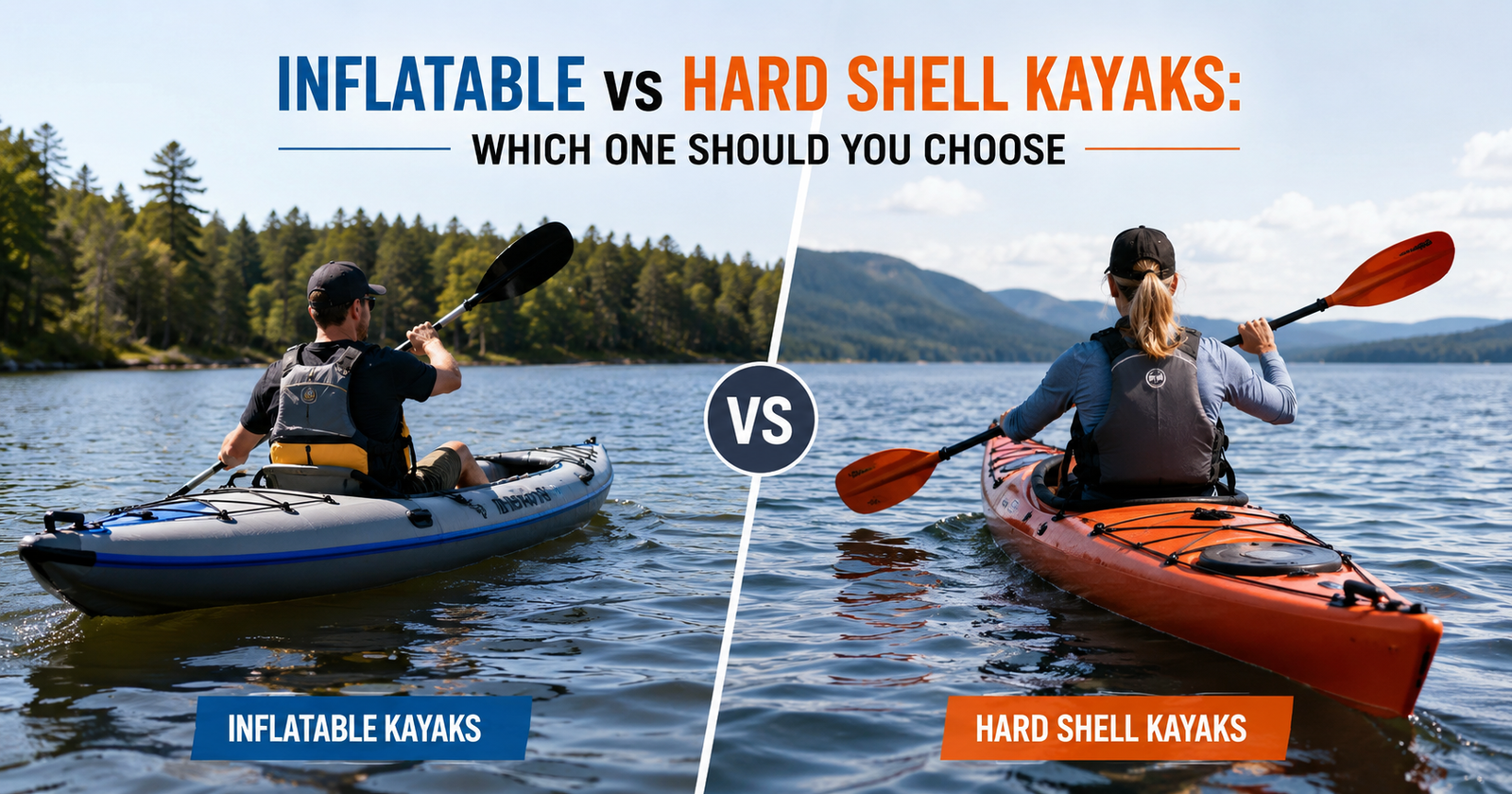
Kayaking has turned out to be one of the most favorite outdoor activities for adventure lovers, fitness lovers and travelers alike. If you want to paddle through calm lakes, explore winding rivers or challenge ocean waves the right kayak selection can shape your experience completely. Before choosing a kayak, make sure you have the essential kayaking equipment for beginners to ensure a safe and enjoyable experience on the water. One of the biggest decisions that novices and even experienced paddlers have to make is whether to buy an inflatable kayak or a hard shell kayak.
Both types of kayaks have come a long way over the years. Inflatable kayaks are no longer seen as flimsy pool toys, and hard shell kayaks still reign supreme in professional and performance paddling. They all come with their own strengths, weaknesses, price-points and use-cases.
Knowing the differences of inflatable vs hard shell kayaks can help you make a smart investment that fits your lifestyle, budget, and adventure goals.
Understanding Inflatable Kayaks
Inflatable kayaks are made of tough materials like PVC or Hypalon or other heavy duty material that you pump up with air. Modern inflatable kayaks are made with multiple air chambers for safety and stability. Many of the top-end models are surprisingly tough and able to cope with rivers, lakes and even coastal waters.
Inflatable kayaks have grown in popularity for one big reason: convenience. People who live in apartments, travel a lot, or don’t have garage space often choose inflatable models, which can be deflated and rolled up into a storage bag.
Inflatable kayaks are particularly attractive to beginners, as they are easy to transport and generally more forgiving on the water. They have a wider structure which makes them more stable and perfect for casual paddling and recreational trips.
Understanding Hard Shell Kayaks
Most people think of paddling sports when they think of kayaks and hard shell kayaks are the traditional style. These kayaks are constructed from hard materials such as polyethylene plastic, fiberglass or carbon fiber. They come in many special designs for touring, fishing, whitewater and racing.
Hard shell kayaks are known for speed, accuracy and performance overall. Their streamlined shape allows them to cut through water more efficiently, giving paddlers more control and maneuverability.
Hard shell kayaks are the best choice for serious kayakers because they are the most durable and perform best in tough conditions, though they take up more space and require more planning for storage and transport.
Performance on the Water
One of the main differences between inflatable kayaks and hard shell kayaks is performance. In general hard shell kayaks are faster and track better. Their stiff construction gives them a smooth glide through the water with less resistance, which is great for long distance touring and advanced paddling techniques.
However, inflatable kayaks sacrifice speed for stability. “They sit a little higher in the water and create more drag, which can slow them down a little bit.” In fact many recreational users like this stability because it means there is less chance of tipping over.
Inflatable kayaks work well on lakes that are calm and for casual river paddling. Hard shell kayaks usually provide better responsiveness and control in rough ocean conditions or for racing and technical whitewater challenges.
Pros of Inflatable Kayaks
One of the biggest advantages of inflatable kayaks is portability. They can be folded into a compact bag and transported in a car trunk without roof racks or trailers. This makes them really handy for travelers and city dwellers.
Another big plus is storage. Unlike hard shell kayaks that require a garage or outdoor storage space, inflatable kayaks can be stored in closets or other small storage spaces.
Inflatable kayaks are also great for beginners. Their wider frame provides great stability and gives beginner paddlers more confidence on the water. Many inflatable models are light weight and easy to carry. Even solo users.
Another often overlooked benefit is impact resistance. Inflatable kayaks will bounce off of rocks and docks without the dents and scratches that are common to hard shell kayaks.
Cons of Inflatable Kayaks
Inflatable kayaks, however, do have some drawbacks despite their convenience. Setup time can be a pain, as you have to blow up and deflate the kayak before and after every trip. Modern pumps speed things up, but you still have to put in some effort.
Inflatable kayaks are typically slower than hard shell kayaks because of their shape and flexibility. This can be felt during long sessions of paddling.
Another downside is susceptibility to punctures. Modern inflatable kayaks are made of very durable materials but can still be damaged by sharp objects. They can be repaired, but some paddlers still worry about punctures.
Furthermore, inflatable kayaks tend to have a shorter lifespan than their premium hard shell counterparts, particularly when subjected to continuous sunlight, improper storage, or rough conditions.
Pros of Hard Shell Kayaks
Hard shell kayaks are great performers. Their stiff bodies provide better speed, tracking and maneuverability making them perfect for advanced kayaking adventures.
They are also very rugged. Good hard shell kayaks, if maintained well, can last for decades. Unlike inflatable types, they are not prone to punctures.
Hard shell kayaks have more specific types for different activities. Whether you like fishing, whitewater rafting, ocean touring, or competitive racing, there’s probably a hard shell kayak out there that’s custom-built for what you want to do.
Hard shell kayaks are more responsive, and provide more precision when turning and handling technical maneuvers, which is why many experienced paddlers prefer them.
Cons of Hard Shell Kayaks
The big disadvantage to hard shell kayaks is storage. These are big kayaks and need their own space at home. This is a common issue for apartment owners or anyone with limited storage space.
Transportation can be difficult, as well. Most hard shell kayaks require roof racks, trailers or pickup trucks to get around. Loading and unloading can be a pain especially if you’re a single user.
Hard shell kayaks are generally heavier and less convenient for spur-of-the-moment trips. Their stiff design also makes them more susceptible to scratches, dents and surface damage while being transported.
Some of the narrower hard shell models might not seem as stable to beginners as the inflatable kayaks.
Price Differences Between Inflatable and Hard Shell Kayaks
Buyers often decide on the basis of price. Inflatable kayaks have a lower entry cost, which is attractive to beginners and casual users. The cost of an inflatable kayak depends on the model, ranging from relatively inexpensive basic kayaks to more expensive high-end models with advanced materials and drop-stitch floors.
Hard shell kayaks can be very different in price depending on the material and specialization. Plastic hard shell kayaks for beginners are pretty cheap, but performance fiberglass or carbon fiber kayaks can be very expensive.
And you often have to pay a premium for roof racks, trailers, storage systems, and transportation accessories on top of the kayak itself if you own a hard shell. The owners of inflatable kayaks have a tendency to avoid a lot of these extra costs.
And the maintenance costs differ. Hard shell kayaks may need repairs for cracks, dents or scratches over time. Inflatable kayaks may need patch kits and proper storage .
Inflatable kayaks are usually a better value for the casual recreational paddler. For serious enthusiasts looking for long-term performance, hard shell kayaks might be worth the extra investment.
Storage and Transportation Considerations
A big thing to consider when picking between these two kayak styles is storage. In the category of inflatable kayak, the inflatable kayak is the clear winner. Once deflated, they can be stuffed into small storage bags and easily stored in apartments, closets or in the trunks of cars.
Inflatable kayaks are a great option for travelers, campers and those with limited living space because they are portable. Some inflatable kayaks can even be taken on airplanes or public transportation.
Hard shell kayaks require a lot more planning. You’ll need enough garage space, outdoor racks or wall mounts to store them properly. And if stored outdoors without protection, exposure to harsh weather conditions can also affect their longevity.
Another major difference is transportation. Inflatable kayaks are light and easy to transport, plus they don’t require any special equipment. Hard shell kayaks generally need roof-mounted carriers and a little extra work when loading and unloading.
Those who enjoy spontaneous weekend trips will often appreciate the convenience of inflatable kayaks because they eliminate the headache of transportation.
Best Use Cases for Inflatable Kayaks
Well suited to recreational paddling, casual lake trips, slow moving rivers, camping adventures and travel based activities. They are especially good for beginners who want stability and convenience but don’t want to spend a lot of money on equipment.
Inflatable kayaks are often the choice of families as they are easy to store and safer when it comes to a relaxed outing. Their portability is also a plus for travelers and digital nomads.
If your kayaking adventures are confined to calm waters, occasional use, and easy transport, then an inflatable kayak can be a great option.
Best Use Cases for Hard Shell Kayaks
Hard shell kayaks are great for experienced paddlers, long distance touring, ocean kayaking, fishing trips, whitewater adventures and racing. They are faster and more accurate, so they are better for demanding environments. However, before taking on challenging waters, it’s important to follow essential kayaking safety tips to reduce risks and enjoy a safer paddling experience.
Professional kayakers and outdoor enthusiasts that paddle regularly tend to prefer hard shell models for their advantages in durability and performance.
If kayaking is your main hobby or sport then investing in a hard shell kayak will greatly improve your experience on the water.
Which Kayak Is Better for Beginners?
Inflatable kayaks tend to have a softer learning curve for most beginners. They are stable which helps to reduce fear of tipping . They are lightweight which makes them easier to handle .
But beginners who want to learn advanced paddling skills or join in challenging kayaking activities may find it helpful to learn on a hard shell kayak right from the start.
Ultimately, the right choice is dependent on how serious you are about kayaking and how often you plan to paddle.
Explore More Outdoor Guides on Buzzplanets
If you love outdoor adventures, travel tips, gear comparisons, and informative lifestyle content, then Buzzplanets is a great resource to check out. The platform is filled with interesting articles on travel, outdoor recreation, technology, lifestyle trends, and practical buying guides that help readers make better decisions for their adventures and day-to-day life.
Whether you’re researching kayaking gear, planning your next adventure, or looking for ideas for outdoor activities, Buzzplanets has useful information for today’s explorers.
Conclusion
Ultimately, whether you get an inflatable or a hard shell kayak will depend on your lifestyle, storage space, budget and paddling goals. Inflatable kayaks are the best for beginners, in terms of portability, ease of use and stability that can be great for recreational use and travel. Hard shell kayaks are more rigid, more durable and more maneuverable making them a better fit for serious paddlers and performance-oriented adventures.
There is no winner overall, because the two types meet different needs. The best kayak is the one that fits your unique usage patterns and allows you to enjoy your time on the water with comfort and confidence.
FAQs
1. Are Inflatable Kayaks Durable for Everyday Use?
Yes, the materials found in current inflatable kayaks, like reinforced PVC and drop-stitch technology, are very strong and make them very durable for regular recreational use. When kept in good condition, they are effective on lakes, rivers and mild coastal waters.
2. Which kayak is easier to carry?
Inflatable kayaks are much easier to carry around because they can be deflated and packed into a small carrying bag. Most hard shell kayaks need roof racks, trailers or big vehicles to transport them.
3. Are hard shell kayaks more durable than inflatables?
Most of the time hard shell kayaks last longer because they’re made from rigid materials that resist wear and tear over time. But with proper care and storage, an inflatable kayak can last for many years.
4. Are inflatable kayaks good to start?
Yes, inflatable kayaks are generally recommended for beginners because they offer good stability and are less likely to tip over. They are easy for beginners too because of their light weight and easy handling.
5. What type of kayak is better for fishing and long tours?
Generally hard shell kayaks are better for fishing and long distance touring, offering better speed, tracking, storage capacity and overall performance on the water.
Summary
Inflatable kayaks are portable and easy to store. They’re also a great choice for beginners and for casual paddling or travel. Hard shell kayaks allow for more speed ,control, and durability when doing more advanced kayaking . Hard shell kayaks are better for long term performance and specialized adventures, while inflatable boats are usually more affordable and easier to store. Your ideal choice will depend on your budget, storage available and your goals for kayaking.