
 By Nick John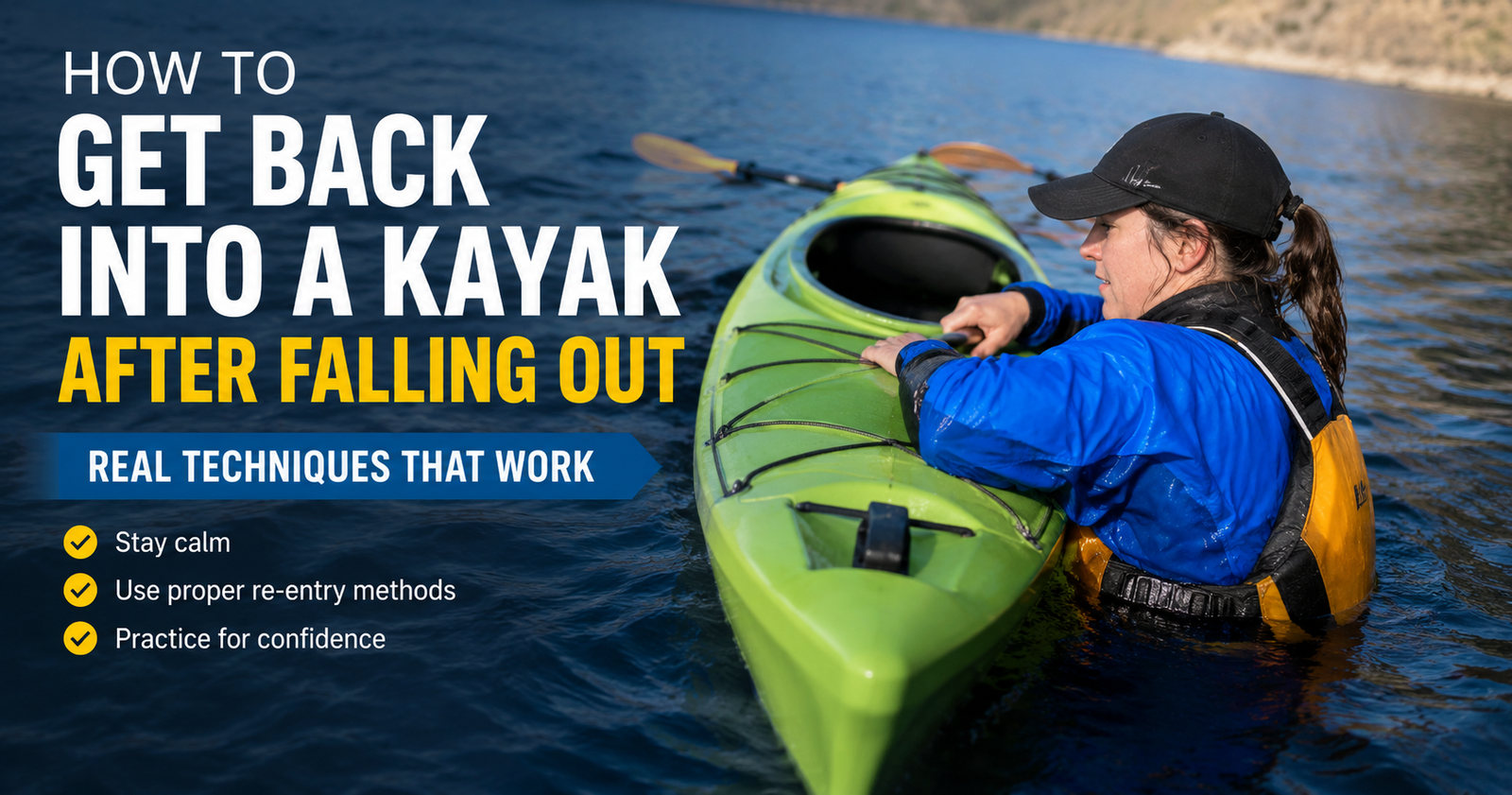
Most kayakers fall out of their boats at some time or other. Even if you are an experienced sailor, unexpected waves, strong currents, balance mistakes or sudden weather changes can cause a capsize. Falling in the water can be startling, but the most important skill is knowing how to safely get back into your kayak.
Many spend hours learning how to paddle but never practice their re-entry techniques. This can cause unnecessary panic in the event of a real emergency. Luckily, getting back into a kayak is a skill that can be learned and improved with practice. Once you know the proper methods, getting back into your kayak is much easier and safer.
In this guide you will learn about real world kayak re-entry techniques, the most common mistakes paddlers make, safety considerations, and practical kayaking tips that may help you take control after an unexpected swim.
Why Kayakers Fall Out
Before you learn how to get back into a kayak, it’s helpful to know why capsizes happen.
Lack of balance is another common cause. Beginners usually transfer their weight suddenly, and this causes the kayak to tip beyond its stability point. Rough water conditions such as waves, boat wakes or strong currents can also flip a kayak unexpectedly.
Improper entry and exit techniques are frequently responsible for accidents near shore. Overreaching for gear can upset the kayak, or sharp turns. Falls are also influenced by weather conditions, fatigue, and lack of experience.
Understanding these causes helps paddlers to become more aware of potential re-entry situations.
1. Staying Calm After Falling Out
The first few moments after a cap are critical. Panic can turn a manageable situation into a dangerous one very quickly.
As you enter the water, concentrate on controlling your breathing. Cold water can make you gasp involuntarily which can bring on anxiety. Just a second to orient yourself and find your kayak and paddle.
Most kayaks are built to float if flipped over. Your kayak is your best flotation device, so stay with it as much as you can. Don’t swim away unless there is imminent danger like strong rapids or obstacles.
Staying calm gives you time to assess the situation and choose the best re-entry option.
2. Assessing the Situation Before Re-Entry
First, look around you before you try to get back into your kayak.
Check water conditions to see if waves, wind or currents are affecting your position. “Don’t forget your paddle. If your kayak has taken on water, see if it needs to be bailed out before re-entry.
If paddling with a group, seek nearby assistance. Assisted rescues are normally easier and safer than solo re-entries.
A few seconds of assessment of conditions can greatly improve the odds of a successful recovery.
3. The Paddle Float Self-Rescue Technique
The paddle float rescue is a very effective method of solo recovery.
A paddle float is an inflatable or foam device that attaches to the blade of your paddle. It acts as an outrigger to stabilize the kayak for re-entry.
After capsizing, attach the paddle float to one paddle blade. Place the paddle behind the cockpit and perpendicular to the kayak. The paddle float rests on the surface of the water to provide support.
Then stand by the cockpit and kick your legs to slide your body onto the rear deck. Keep your weight low and centered. With the paddle float still under pressure, slowly slide your body into the cockpit.
This technique works very well for touring kayaks and sea kayaks in open water conditions.
4. The Scramble Re-Entry Method
The scramble method is popular among recreational kayakers since it requires no special equipment.
Start by getting to the side of the kayak near the cockpit. Grab the far side of the kayak and kick hard as you pull your chest over the seat.
The trick is to keep your body as parallel as you can. Trying to go straight up usually capsizes the kayak. Instead, picture yourself sliding into the kayak like you’re mounting a surfboard.
When your chest is right over the cockpit, twist your torso gently and swing one leg then the other into position.
The scramble technique is simple in concept, but takes practice and good upper body strength.
5. Cowboy Re-Entry Technique
Another common self-rescue method is the cowboy rescue.
This technique starts at the stern of the kayak. Grab the back of the kayak and pull yourself up onto the back deck. Sit on the kayak as you would on a horse.
Slowly crawl forward, keep your balance. Don’t move suddenly, keep your center of gravity low.
As you get closer to the cockpit, climb in carefully and draw your legs inside.
The cowboy rescue is especially useful in calm water but may be difficult in rough conditions.
6. Assisted Kayak Rescue
When you’re paddling with others, assisted rescues are usually the quickest and safest way to go.
The T-rescue is one of the most common assisted rescues. In this method, a second kayaker steadies your overturned kayak and assists you in dumping any excess water. They steady the kayak when it’s vertical and you get back in.
The paddler in support adds much-needed stability and reduces the likelihood that the canoe will capsize again during re-entry.
It is much safer to paddle in a group because help is at hand if needed.
7. Re-Entering a Sit-On-Top Kayak
Sit-on-top kayaks are generally easier to re-enter than sit-inside types.
Once you have fallen out, get yourself in position next to the seat area. Reach across the kayak to grab the opposite side. Pull yourself across the seat with a strong kick.
There is no enclosed cockpit so once your torso is in you can just swing your legs back into the kayak.
Re-entry is generally simple and forgiving, which is one of the reasons sit-on-top kayaks are a popular choice for beginners.
8. Re-Entering a Sit-Inside Kayak
Sit-inside kayaks have extra problems with the limited opening of the cockpit.
Stow the kayak and choose a re-entry method (paddle float rescue, assisted rescue, etc.). Maintain your balance and slowly slide into the cockpit.
If necessary, clear away excess water with a bilge pump or sponge when in place.
Confidence for real-world situations is built by practicing in calm conditions.
9. Challenges of Cold Water Re-Entry
Cold water completely alters the difficulty of any rescue.
Even seasoned paddlers may find it difficult due to reduced muscle function and loss of dexterity. Cold shock can impact breathing and decision making within seconds of immersion.
Wearing the proper gear, such as wetsuits or dry suits, greatly increases the chances of survival and rescue.
In cold environments, time is often of the essence, so practicing re-entry techniques is even more important.
Common Mistakes During Kayak Re-Entry
Many paddlers make mistakes that can be avoided, increasing chances of failure.
The biggest mistake is to try and climb up vertically into the kayak. This makes the weight too high and will often flip the kayak again.
Another problem I see often is rushing. Sudden, jerky movements will upset the balance of your kayak. Slow and deliberate is generally better.
Some paddlers completely ignore practice. You can´t learn rescue techniques just by reading. Repetition in the real world builds the muscle memory needed in an emergency.
Another common mistake is to ignore the weather. Strong winds and waves can make rescue attempts difficult and should always be taken into consideration before a launch.
Practicing Re-Entry Skills Safely
Best practice is in warm, still, shallow water, under supervision.
Begin intentionally by flipping your kayak in shallow water. Experiment with various re-entry techniques and discover which procedures work best for your type of kayak and your body.
Repeat the drills several times until the movements feel natural. Practicing in a safe setting increases confidence and decreases anxiety in real emergencies.
As you get better, slowly practice more difficult conditions, but always take the right safety measures.
Building Strength and Balance for Easier Re-Entry
Physical conditioning can ease recovery from a kayak a great deal.
A strong core is the key to keeping your balance as you climb back on board. Exercises like planks, bridges and rotation movements can help improve control.
Upper body strength helps with pull motions on re-entry. Swimming, rowing or resistance training can improve these skills.
Balance exercises also make you a better kayaker overall. Better balance means less capsizing and better recoveries when they do.
Essential Safety Equipment
The right equipment can make a massive difference to the success of a rescue.
Always wear a properly fitting personal flotation device. This keeps you afloat and saves energy in recovery.
A paddle float can be a useful self rescue aid. Bilge pumps are used to pump water out after reentry. Paddle leashes prevent you from losing equipment when you capsize.
There are also communication devices and emergency signaling equipment for added safety, especially on longer trips.
A capsize is often a minor inconvenience or a serious emergency, depending on the proper preparation.
How Buzzplanets Can Help Outdoor Enthusiasts
Buzzplanets is a great resource for anyone passionate about kayaking, outdoor adventures, travel experiences and practical activity guides. The platform regularly publishes informative content designed to help readers improve their outdoor skills, discover new adventures and make better decisions while enjoying recreational activities.
Whether you are learning advanced kayaking skills, travel destinations or looking for expert outdoor advice, Buzzplanets provides valuable information that can help you enjoy your adventures with more confidence and safety.
Conclusion
Getting dumped out of a kayak isn’t a question of if, but when. Every paddler will have an unexpected capsize at some point and the ability to recover efficiently is one of the most valuable skills you can develop. Skills such as paddle float rescues, scramble re-entries, cowboy rescues and assisted recoveries can be learned that will multiply your safety on the water.
Practice is the most important thing. Reading about these methods gives you knowledge, but practicing them gives you confidence and competence. A relaxed approach, correct gear and regular practice of rescue techniques can transform a potentially stressful situation into a manageable aspect of the kayaking experience.
FAQs
1. What should you do immediately if you fall out of a kayak?
Stay Calm. Hold onto your kayak, breathe, and assess the conditions around you before attempting to get back in.
2. What is the easiest re-entry method for novice kayakers?
The scramble re-entry and sit-on-top kayak re-entry techniques are usually the easiest for beginners to learn.
3. Is it possible to get back into a kayak without special gear?
Yes. The scramble rescue and cowboy rescue don’t need any extra gear, but a paddle float will help you get back in.
4. How often should I do a kayak self-rescue?
It’s good to practice several times a season. Practice often and muscle memory and confidence will grow.
5. Is it more difficult to re-enter a kayak in cold water?
Yes. The cold water can affect your strength, coordination and breathing, and make rescue more difficult and time critical.
Summary
A basic paddling skill is knowing how to re-enter a kayak after falling out. Kayakers can safely return to their boats after a capsize using techniques like paddle float rescues, scramble re-entries, cowboy rescues and assisted recoveries. Factors for successful kayak recovery include staying calm, practicing often, wearing the right safety gear and knowing the water conditions. With preparation and experience, a capsize becomes a manageable event and not a dangerous situation.