
 By Nick John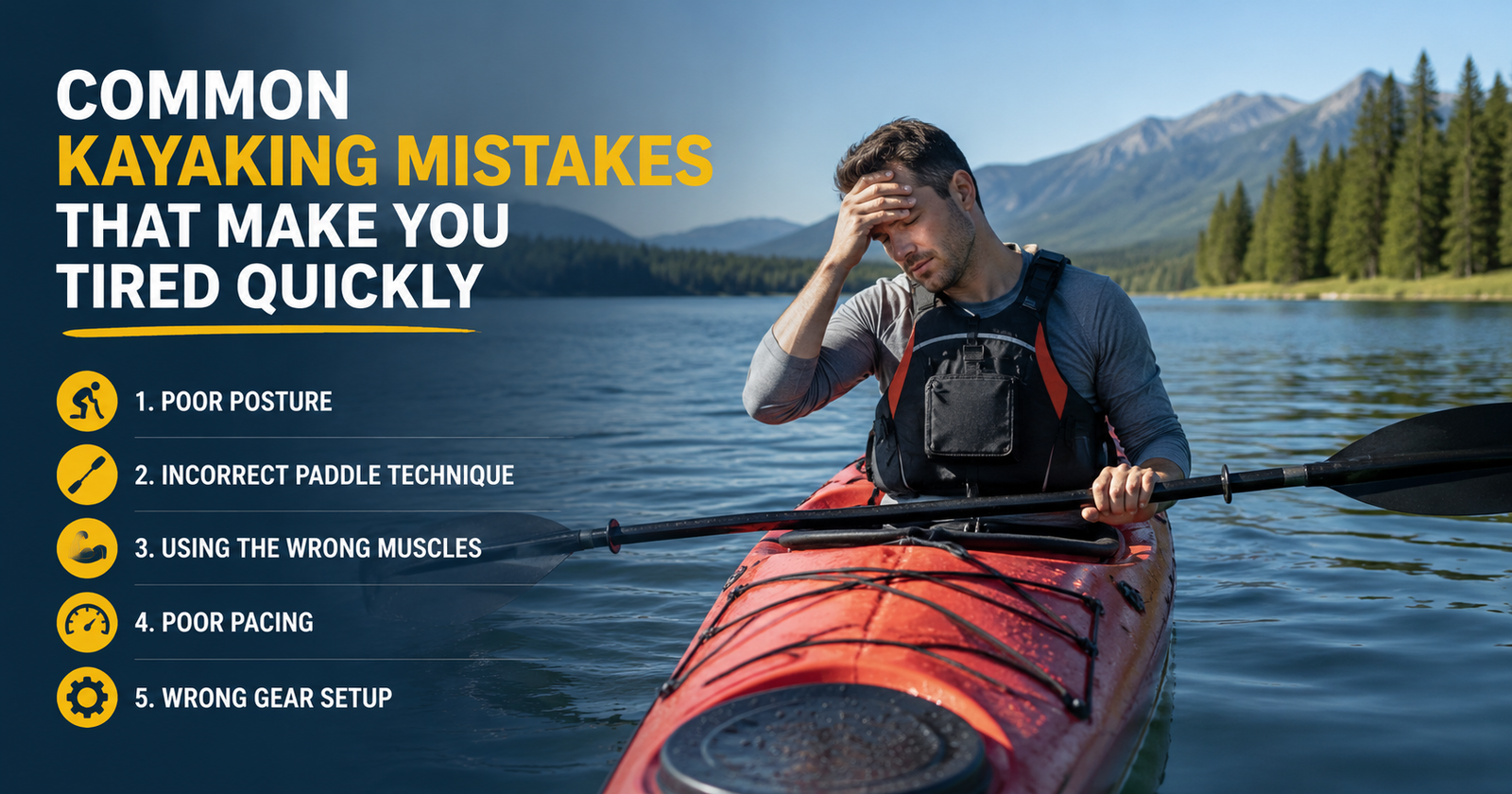
Kayaking is one of the most enjoyable outdoor activities, combining the best of adventure, exercise and relaxation. Kayaking can be an unforgettable experience whether paddling across a tranquil lake, exploring coastal waters or navigating a winding river. However, many newbs and even experienced paddlers find themselves exhausted way too soon. Instead of spending hours on the water they get tired after a short distance.
The reason is often not lack of fitness but a series of common mistakes that waste energy and put unnecessary strain on the body. Even small errors in technique, posture, boat set-up and paddling habits can cause a large increase in fatigue. Knowing these mistakes and learning to correct them will help you paddle longer, be more efficient and enjoy kayaking without feeling drained.
Why Energy Efficiency Matters in Kayaking
In kayaking, efficiency is more important than brute strength. Many new paddlers believe stronger strokes will make them go faster and farther. But in fact, moving efficiently means you can save energy, keep your endurance for the long haul.
Professional kayakers don’t just use power, they use technique. Every paddle stroke is built for maximum forward momentum with as little wasted effort as possible. If your body and paddle and kayak all work together as they should, you can go long distances without getting too tired.
Often, kayaking fatigue is a result of energy leaks. They are leaks that happen when bad habits make your muscles work harder than necessary. The secret to becoming a better paddler is to find these mistakes and get rid of them.
1. Using Too Much Arm Strength
One of the biggest mistakes that beginners make is to paddle entirely with their arms. The arms are relatively small muscle groups when compared to the muscles in your torso and core. You get tired quickly and your arms get sore using only your arms.
The key to efficient kayaking is rotating your torso with every stroke. Most of the power comes from your core muscles, your arms are just connectors between your body and the paddle. This technique distributes the load to larger muscle groups & greatly reduces fatigue.
As you paddle concentrate on rotating your chest and shoulders with each stroke. Imagine your torso driving the paddle, not your arms drawing it through the water. A small change like this can make a huge difference to endurance.
2. Poor Paddling Posture
How you hold your body has a lot to do with saving energy. Many paddlers have a tendency to slump forward or sit too far back in the kayak. Bad posture limits your breathing, reduces paddling efficiency and creates unnecessary muscle tension.
Good posture in a kayak is to sit up straight, with your back straight and shoulders relaxed. Your feet should be comfortably against the foot braces and your knees in soft contact with the kayak.
Proper posture enables your lungs to expand fully and your torso to rotate efficiently. This means you can paddle more comfortably and for longer periods without tiring.
3. Gripping the Paddle Too Tightly
Many kayakers unknowingly waste energy by squeezing the paddle too hard. A tight grip creates tension throughout the hands, wrists, forearms, shoulders and upper back.
This strain, if prolonged, results in muscle fatigue and pain. It can also make you more likely to get blisters and hand cramps.
Instead, grip the paddle with a loose but firm hold. Imagine catching a bird tightly enough that it cannot fly away, but loosely enough that it is not hurt. A lighter grip reduces muscle strain and increases overall paddling efficiency.
4. Choosing the Wrong Paddle Size
Your main tool in the water is the paddle. If it is too long, too short, too heavy, or not the right size for your body, you will get very tired from paddling.
A paddle that is too long requires more effort to lift and move. A paddle that is too short results in awkward motions and ineffective strokes. Same goes for a heavy paddle – it will tire you out more over time.
Choosing the right paddle length for your height and kayak width can make a big difference. Lightweight paddles may cost more to buy, but can often save a lot of energy on longer trips.
5. Taking Inefficient Paddle Strokes
Another common mistake is to take paddle strokes that are too short or too long. Many beginners put the paddle well behind their body, and keep pulling long after the stroke is giving them any useful propulsion.
The most efficient part of the paddle stroke is between your hips and your feet. Outside of this region the paddle generates less thrust forward and expends more energy.
Short, smooth, controlled strokes are generally more effective than exaggerated movements. Efficient strokes save effort while keeping pace.
6. Ignoring Core Engagement
Some of the strongest and most durable muscles in the body are your core muscles. Unfortunately many paddlers do not use them effectively.
When your core isn’t working, smaller muscles in the arms and shoulders need to pick up the slack. That means you get tired faster and don’t perform as well.
With each stroke you engage your abdominal and back muscles, allowing you to transfer power through your body efficiently. It helps with balance, and takes the load off of certain muscle groups.
One of the most valuable skills any kayaker can learn is how to develop strong core engagement.
7. Fighting Against the Water
Some paddlers try to muscle through every wave, current or gust of wind they meet. This method often results in rapid burnout.
Experienced kayakers learn to work with nature, rather than constantly fighting it. They take advantage of currents. They check the wind direction and change their route. They stay on pace instead of sprinting unnecessarily.
Understanding how water moves can help you save energy and travel more efficiently. Water is always stronger than the person in the boat, so often cooperation is better than resistance.
8. Maintaining an Unsustainable Pace
Excitement can lead beginners to paddle too hard at the beginning of a trip. They begin at full speed, quickly exhaust their reserves of energy and find it difficult later on in the journey.
Kayaking is an endurance sport. Always, long-term speed beats short-term speed.
Experienced paddlers typically find a comfortable enough cadence to maintain for hours. If you know how to pace yourself, you’ll be able to go further and keep up your energy through the whole journey.
9. Neglecting Hydration
Dehydration is an under recognized cause of kayaking fatigue. Most people do not realize how much fluid is lost during outdoor activities, especially in warm weather.
Even a little dehydration can decrease endurance, affect focus, and make you feel more tired.
You should carry enough water and take regular sips during your journey. Waiting until you feel thirsty is often too late because you may already be experiencing performance decrements from dehydration.
You’ll want to stay hydrated to keep your energy up and your muscles happy during your paddle.
10. Wearing Improper Clothing
Clothing can very much affect the comfort and endurance on the water. Heavy cotton clothing soaks up water and feels uncomfortable when wet. Fatigue can also be caused by too much heat retention or lack of protection from cold weather.
Kayakers need moisture-wicking and quick-drying gear for their outdoor pursuits. Layering properly helps keep your body temperature stable and stops you from losing excess energy.
When you’re comfortable, your body can channel more energy into paddling and less into managing environmental stress.
11. Poor Seat Adjustment
Sitting in an awkward position can tire out your muscles long before your heart tires out.
Too many kayakers don’t realize the importance of properly adjusting their seat, footrests and back support. Pressure points and inefficient posture are caused by poor positioning.
A good-fitting cockpit will allow you to maintain good body mechanics and transfer power well. A few little tweaks before launch can make a big difference to long paddle comfort.
12. Failing to Build Endurance Gradually
Many new kayakers try long distance adventures before they have built up the stamina. This results in too much fatigue and a frustrating experience.
Like any physical exercise, kayaking endurance is something that develops slowly over time. Regular practice helps develop paddling muscles, improve cardiovascular fitness and refine technique.
Gradual increase in distance from shorter trips allows the body to adapt naturally. Consistency is better than one or two intense outings.”
13. Overlooking Weather Conditions
Wind, waves, temperature and currents can dramatically affect energy expenditure. Paddling into a stiff headwind takes a lot more effort than paddling in calm conditions.
Some kayakers do not check the weather report before they go out and that can lead to unexpected tiredness.
Using environmental conditions to plan routes is helpful in saving energy. Bad weather during the launch or a lack of knowledge about local weather patterns can make for a much less enjoyable trip.
14. Carrying Excess Gear
A lot of recreational paddlers carry way more gear than they really need. Adding weight means more drag, less maneuverability and more effort to push the kayak.
Safety equipment is a must, but the unnecessary stuff should be kept to a minimum. A lighter kayak tends to be more efficient in the water.
Knowing what you really need for each trip can help you avoid fatigue and perform better overall.
15. Not Taking Short Breaks
If you paddle continuously without taking a break, you will eventually tire. Short breaks are good even for the most experienced kayakers.
A short break helps the muscles to recover, rehydrate and restore energy levels.
Strategic rest periods can often improve overall endurance and help maintain consistent performance throughout the day.
Learning From Reliable Outdoor Resources
You need to practice to get better at kayaking, but you also need knowledge. By reading educational material from reliable outdoor sources, paddlers can improve their technique and avoid common mistakes.
Buzzplanets has tons of great stuff for anyone who loves the outdoors, traveling, kayaking, and practical guides to all kinds of things. Using informative resources can speed up your learning and help you become a more confident and efficient kayaker.
Conclusion
Kayaking should be a fun and rewarding experience, not a constant battle against fatigue. Many paddlers get tired fast, not because they aren’t fit, but because they make mistakes that waste energy without knowing it. Some of the most common causes of unnecessary fatigue are bad posture, overusing the arms, death grip on the paddle, inefficient paddling, not drinking enough water, and not accounting for environmental conditions.
Proper technique, efficient body mechanics and smart trip planning are things you can work on that can dramatically improve your endurance on the water. Small changes can often have profound effects. The more efficiently you paddle, the farther you can go and the less energy you expend. All of these improvements over time make kayaking safer, more comfortable and a helluva lot more fun.
Frequently Asked Questions
1. Why do my arms get so tired so quickly when I kayak?
Maybe your arms are working too hard? Kayaking is very much about core engagement and torso rotation not just arm strength.
2. Does kayak weight tire you more?
Yes. Bigger kayaks tend to require more effort to move, especially when starting, turning or paddling into wind or current.
3. How do you build up kayaking endurance?
Practice frequently, focus on good technique, stay hydrated, maintain good posture and increase your paddling gradually.
4. What is the best position for kayaking?
Sit with your shoulders relaxed and your back straight but not rigid. Use your core muscles to support your posture. Rest your feet comfortably on the foot braces.
5. Kayaking is exhausting, isn’t it?
Not quite. Kayaking is definitely a workout, but if you use proper technique and paddle with efficiency, you can spend many long hours on the water without becoming overly fatigued.
Summary
Common mistakes that lead many kayakers to tire out quickly include relying too much on arm strength, poor posture, holding onto the paddle too tightly, inefficient strokes, inadequate hydration, and paddling at too fast a pace. Fatigue can be helped a lot with good technique, core engagement, proper equipment and smart planning. Correcting these mistakes enables kayakers to paddle further, feel stronger and have a more comfortable experience out on the water.