
 By Nick John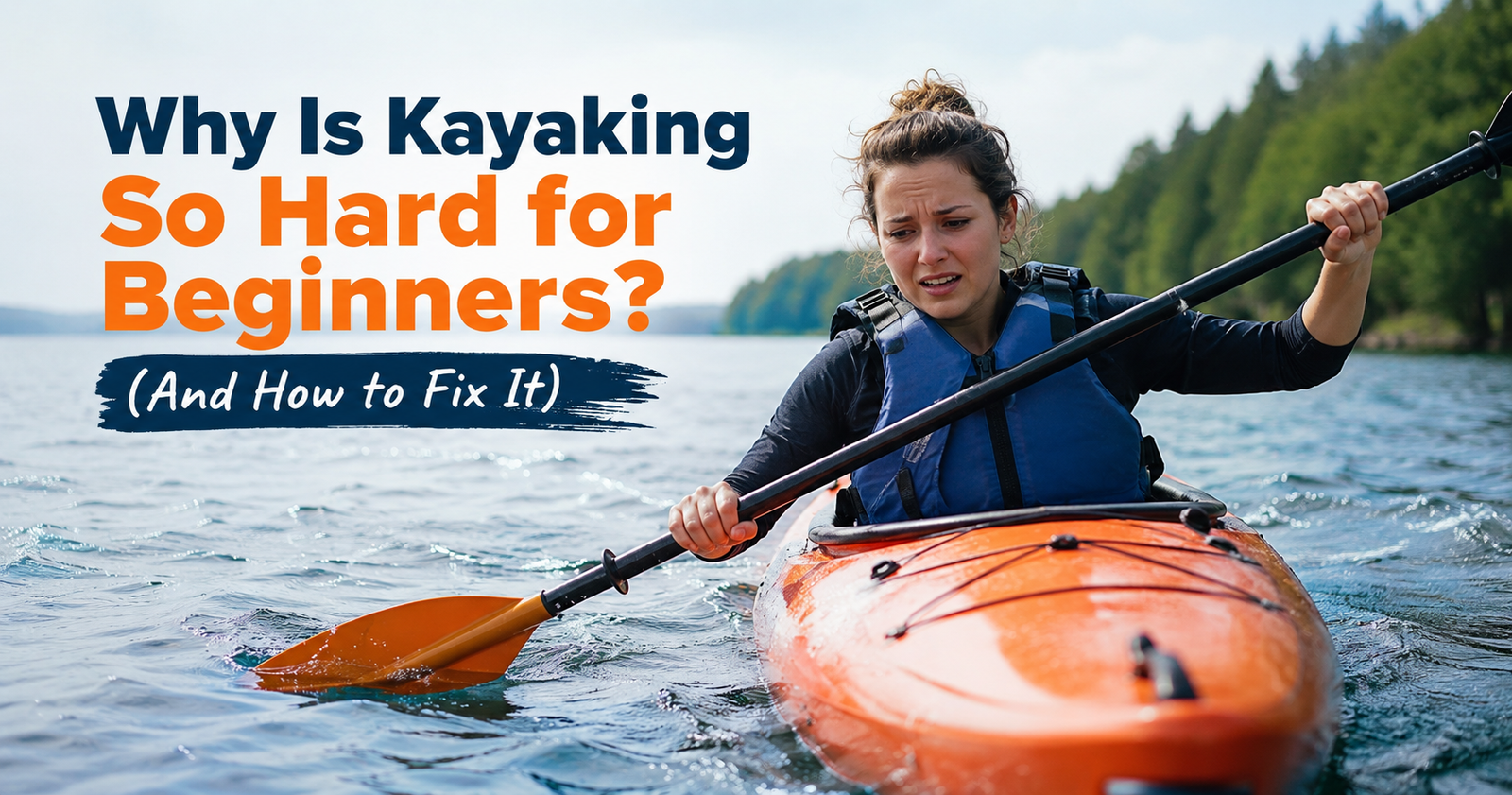
Kayaking has been depicted as a gentle outdoor activity, with paddlers smoothly navigating calm lakes, winding rivers and stunning coastal waters. It can be a fun and peaceful experience, but most beginners soon discover that kayaking is much harder than it looks. Those first few outings can be frustrating, exhausting, even scary.
New kayakers have a hard time with balance, paddling technique, steering and understanding how the water conditions affect their movement. There are some who become discouraged after the first experience because they were looking for a smooth and easy adventure but instead find themselves spinning in circles, getting tired in minutes or feeling unstable in the boat.
The good news is that these challenges are totally normal. We were all beginners at one time and most of us had many of the same struggles. Understanding why kayaking is initially tough, and learning how to overcome the typical hurdles, can drastically improve your experience on the water.
In this guide we will discuss why kayaking is difficult for beginners and provide some useful solutions that will make you more confident and competent in your paddling.
1. The Learning Curve of Kayaking
A major reason that beginners have a hard time with kayaking is that it requires a combination of physical skills, coordination, balance and technique. Kayaking is also unlike other activities such as walking or cycling in that you have to control a floating vessel while also controlling your body movements and paddle strokes.
A lot of new kayakers think it’s about the arms. In fact, real kayaking is an activity that involves the whole body. Paddling effectively targets the core muscles, back, shoulders, and legs. It takes time and practice to learn how these movements are linked.
There is definitely a learning curve when you begin to kayak . With a few trips under your belt, basic skills become second nature and kayaking becomes a whole lot of fun and more manageable.
2. Poor Paddling Technique Creates Unnecessary Fatigue
The most common mistake beginner make is using the wrong paddling techniques. Paddling with their arms is common among many new kayakers and can easily lead to fatigue and sore muscles.
Experienced paddlers use the strength of their torso, not just their arms, to drive themselves through the water. This method spreads the work across larger muscle groups and conserves energy over long distances.
Inefficient paddle placement can also lead to inefficiency. If the paddle enters the water at the wrong angle or if it exits too late, each stroke becomes less effective. And so it can look like beginners are working really hard but not getting very far.
The answer is to emphasise technique, not power. A simple kayaking lesson, watching instructional videos or practicing proper stroke mechanics can greatly improve efficiency and reduce fatigue.
3. Balance Feels Unnatural at First
Kayaks can feel tippy during the first few trips, and beginners often worry about capsizing. If you are sitting low to the water and the kayak is skimming beneath you it creates a weird feeling that can make even calm conditions feel difficult.
Most often it is psychological rather than physical. Most recreational kayaks are designed to be stable, so they’re much less likely to tip than beginners expect.
The key to better balance is relaxation. The moment they get nervous, paddlers tense up and make jerky movements. In fact, these reactions can make the kayak feel less stable.
Practicing on calm water builds confidence. Your body gradually becomes accustomed to small movements, making balance feel almost automatic.
4. Steering Can Be Surprisingly Difficult
It is very frustrating for a beginner not to be able to paddle in a straight line. A lot of first time kayakers are spinning all over the place or leaning to one side.
This is typically because of uneven paddle strokes. If you push harder on one side, the kayak will turn rather than go forward.
Wind, water currents, and the kayak’s design can also influence your steering. Environmental conditions often affect direction more than beginners realise.
Control can be helped a lot by mastering fundamental steering strokes, balancing paddle action, and working on corrective strokes. Steering is a lot more intuitive when you get used to it.
5. Fear of Capsizing Affects Performance
Fear is another reason kayaking seems difficult. If paddlers are worried about falling in the water, they can become hesitant and tense, which in turn hurts balance and technique.
Most beginners have a tendency to hold the paddle too tightly and to move it randomly, because they are afraid to make mistakes. This tension creates a lack of fluidity and efficiency.
Knowing the kayak safety procedures can greatly reduce your anxiety. Confidence comes from wearing a well-fitted life jacket, kayaking in calm conditions and learning basic self-rescue techniques.
With familiarity, fear will slowly fade and paddlers will become more comfortable trying new skills.
6. Weather Conditions Make Kayaking Harder
The environment also has a huge part to play in how hard kayaking is. The quiet lakes are a different experience from the windy coastlines or the flowing rivers.
Many beginners choose difficult conditions without realising how much they increase the difficulty level. The wind can be strong enough to blow a kayak off course, and currents require additional effort to overcome.
Small changes in weather can affect performance. Even a small headwind can double the energy needed to travel a given distance.
For the new paddler, calm water and good weather conditions will make your learning experience a lot more enjoyable. Check the forecast before you set sail and you can avoid unnecessary struggles.
7. Physical Conditioning Matters More Than People Expect
Kayaking is open to people of all fitness levels, but is still affected by physical conditioning. Beginners not used to upper-body and core-focused activities may tyre quickly.
Long periods of paddling require muscles most people don’t normally use. It’s normal to have sore shoulders, back muscles and stomach muscles after the first few kayak trips.
The good news is that kayaking builds fitness over time. You’ll make faster progress and your trips will be less tiring if you include core and shoulder strengthening and cardiovascular exercises in your paddling training.
Most of the time, consistency trumps intensity. Endurance and strength are developed slowly, through regular practice.
8. Choosing the Wrong Kayak Creates Challenges
Not all kayaks are the same. One reason that beginners have trouble is that they may start out with equipment that is not appropriate for their skill level.
Narrow performance kayaks are generally faster, but less stable. Recreational kayaks, however, are designed for stability and simplicity.
A high-end kayak can make balancing and manoeuvring an unnecessary challenge for a beginner. Likewise a poorly sized paddle can reduce efficiency and increase fatigue.
Choosing gear that is made for beginners can be the difference between comfort, confidence and overall performance.
9. Mental Expectations Can Lead to Frustration
Many people get into kayaking with bad expectations. Travel commercials and social media videos portray expert paddlers gliding through beautiful waters with ease.
Rarely do these images reveal the learning process behind such skills. Beginners sometimes expect to feel comfortable immediately and are disappointed when reality is different.
Realising that kayaking is a skill that develops over time contributes to a healthier mindset. You make mistakes every time you go out but every mistake is a chance to learn and get better.
Progress in kayaking is usually incremental. Little tweaks to technique, endurance and confidence all at some point culminate in a vastly improved experience.
How to Improve Your Kayaking Skills Faster
Getting better is all about focused practice, not just time on the water. Beginners who deliberately focus on specific skills will progress far more rapidly than paddlers who paddle blindly.
Practicing forward strokes, turning techniques, and balance exercises in calm conditions lays a strong foundation. Taking lessons from a professional can help you learn faster, too, by correcting mistakes before they become ingrained.
It is better to go kayaking for short periods frequently than to go for long periods infrequently. Regular exposure allows the skills to develop naturally, while minimising physical and mental fatigue.
Patience is just as important. All experienced kayakers were beginners at one time and faced many of the same issues.
The Importance of Building Water Confidence
One of the most valuable assets a kayaker can develop is water confidence. Many problems are not due to physical limitations but uncertainty and anxiety.
Learning how to navigate water, safety protocols, and slowly working your way up through various environments can really boost confidence.
“The more relaxed and efficient the paddlers get, the more confident they get. They are more fluid in their movements, more responsive to changes in conditions, and enjoy the experience more fully.
Confidence is not developed by avoiding challenges; it is developed by conquering manageable challenges step by step.
Why Most Beginners Eventually Love Kayaking
Kayaking can be difficult at first, but it is one of the most rewarding outdoor activities available. The difficulty of the trials during the process of learning makes future success all the more satisfying.
Once you’re comfortable with the basic skills, kayakers have access to incredible experiences. They can find secret waterways, see wildlife from different vantage points, improve their health and find peace on the water.
Many who have struggled with kayaking at first have become passionate lifelong enthusiasts of the sport. The early struggles are part of the ride not things that prevent you from enjoying.
How Buzzplanets Can Help Outdoor Enthusiasts Learn More
Buzzplanets is a great place to find useful information for those looking for information about outdoor adventures, travel experiences, sports and useful lifestyle guides. Whether you are learning kayaking, discovering new recreational activities, planning outdoor trips or looking for expert advice on varied topics, Buzzplanets has interesting and informative content, to help the readers to make the most of their experience. The best way for beginners and seasoned adventurers alike to keep growing their knowledge and confidence is to keep up-to-date on the latest articles on Buzzplanets.
Conclusion
For many beginners, kayaking can seem difficult because it combines balance, coordination, technique, physical exertion and environmental awareness in one activity. Learning to paddle can seem overwhelming due to challenges such as poor paddling technique, steering problems, fear of capsizing, unfavourable weather conditions, and unrealistic expectations.
But these are just temporary hurdles. Kayaking is a lot easier and more fun with the right teaching, practice and gear and time. Each time on the water builds the skills and confidence to paddle efficiently and safely.
The key is to have fun with the learning process and focus on gradual improvement. Before you know it, what once felt hard turns into one of your favourite outdoor activities.
Frequently Asked Questions
1. Is canoeing easier than kayaking?
Kayaking can be a little bit more difficult at first because you have to get used to the balance and paddle coordination. But once you learn the basic techniques, it often seems easier and more efficient to control a kayak.
2. How long does it take to learn kayaking?
After a few outings, most beginners feel comfortable with the basic kayaking skills. You will begin to notice the difference in your confidence and technique with only a few weeks of regular practice.
3. Why do my arms get tired so fast when I paddle?
Usually, arm fatigue is caused by relying on arm strength rather than using proper rotation of the torso. Correct paddling engages larger muscle groups and makes for a more efficient use of effort.
4. What type of kayak is best for beginners?
For beginners, recreational kayaks are probably the best choice as they offer great stability, comfort and ease of use in calm waters.
5. Is it possible to learn to kayak without lessons?
There are many who learn on their own. However, professional lessons can speed up skill development, increase safety awareness and help beginners avoid common mistakes.
Summary
Kayaking for beginners is difficult for several reasons, such as balance issues, poor paddling technique, steering problems, fear of capsizing, and unfamiliar water conditions. These are common problems and they get better with practice, good equipment and patience.